Category: VAT
UAE VAT Update 2026: New Foreign Currency Conversion Requirements Businesses Need to Know
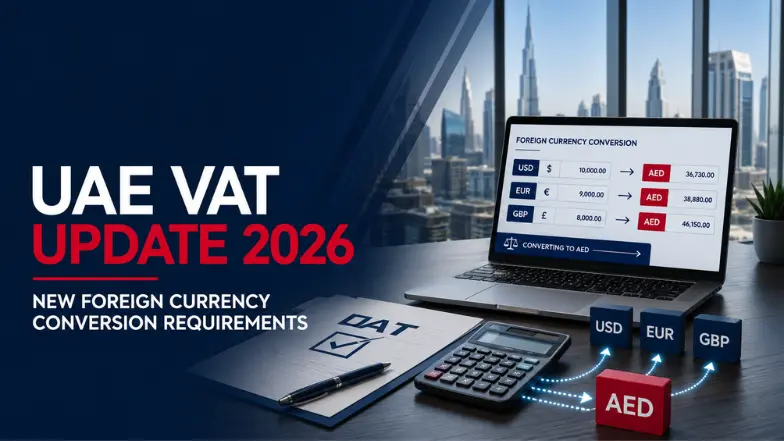
The UAE VAT landscape continues to evolve, making it increasingly important for businesses to maintain accurate tax calculations and reliable financial records.
One area requiring particular attention in 2026 is the treatment of transactions conducted in foreign currencies. The Federal Tax Authority (FTA) has provided updated guidance concerning the conversion of foreign currency amounts into UAE dirhams for VAT purposes.
For UAE businesses dealing with international customers, overseas suppliers, or transactions denominated in currencies other than AED, understanding these requirements is essential for accurate VAT reporting and compliance.
Why Foreign Currency Conversion Matters for UAE VAT
Businesses operating in the UAE frequently issue or receive invoices in currencies such as US dollars, euros, British pounds, and other foreign currencies.
However, for UAE VAT purposes, relevant amounts must be expressed in UAE dirhams (AED).
The exchange rate used can therefore directly affect the AED value recorded for a transaction and, consequently, the VAT amount reported.
Even relatively small inconsistencies in exchange-rate calculations can become significant when a business processes a large number of foreign currency transactions.
For finance and accounting teams, the issue is not simply choosing an exchange rate. Businesses also need a consistent and properly documented approach that can be supported by their accounting records.
What Has Changed in 2026?
The 2026 update provides businesses with a clearer framework for determining the appropriate AED equivalent when dealing with foreign currency transactions for VAT purposes.
A key aspect is the use of approved exchange-rate platforms when determining the applicable conversion rate.
Where the relevant requirements apply, businesses should use the prescribed approach to determine the AED value at the appropriate time and date of the transaction.
This is particularly important for companies with regular cross-border transactions or accounting systems that automatically convert foreign currency amounts.
Consistency Is Important
One of the important compliance considerations under the updated approach is consistency.
Once a business adopts the relevant approved platforms for determining its foreign currency exchange rates, the same selected platforms should be used consistently throughout the applicable calendar year.
This means finance teams should avoid changing exchange-rate sources simply because another platform provides a more favourable rate for a particular transaction.
A documented and consistent methodology can help businesses maintain reliable VAT calculations and provide a clearer audit trail.
How Should the Exchange Rate Be Determined?
For transactions requiring foreign currency conversion, businesses should determine the appropriate exchange rate based on the applicable requirements at the relevant date and time of the supply or receipt.
Where the methodology requires rates from the approved platforms, the relevant rates should be obtained and the required average calculated to establish the AED equivalent.
Businesses should ensure that the process used in practice matches the methodology configured within their accounting or ERP system.
This is particularly important for companies processing high volumes of transactions automatically.
Which Businesses Should Pay Attention?
The update can be particularly relevant for UAE businesses that regularly deal with:
- International customers and suppliers
- Foreign currency tax invoices
- Cross-border services
- Imports and exports
- Overseas professional service providers
- International e-commerce transactions
- Multi-currency accounting systems
Businesses with only occasional foreign currency transactions should also ensure that the correct methodology is followed whenever such transactions occur.
Impact on Accounting and Bookkeeping
This VAT update is not only a tax department matter. It also has practical implications for accounting and bookkeeping processes.
Accounting teams may need to review how exchange rates are captured in their systems, how foreign currency invoices are converted, and whether supporting evidence for the rates used is being maintained.
Businesses should consider reviewing:
Accounting software settings: Confirm that exchange-rate configurations align with the VAT requirements.
Tax invoice processing: Ensure foreign currency invoices are converted appropriately for VAT reporting.
Record keeping: Maintain sufficient documentation supporting the exchange rates and methodology applied.
Internal procedures: Establish a consistent process that accounting and VAT teams can follow.
System automation: Check whether ERP or accounting software automatically retrieves rates from sources that align with the business’s selected methodology.
A mismatch between the company’s VAT procedure and its accounting system could potentially result in inconsistent reporting.
Why Record Keeping Is Essential
Accurate documentation is an important part of VAT compliance.
Businesses should be able to demonstrate how the AED value of a foreign currency transaction was determined. This may include maintaining appropriate evidence of the exchange rates used and ensuring that transaction records can be reconciled with VAT returns and accounting records.
Strong record-keeping procedures also make it easier to respond if transaction calculations are reviewed as part of a tax audit or compliance check.
What Should UAE Businesses Do Now?
Businesses dealing with foreign currency transactions should use this update as an opportunity to review their existing VAT and accounting procedures.
Finance teams should identify the exchange-rate sources currently being used, confirm whether their methodology meets the applicable requirements, and check whether the same approach is being followed consistently.
Companies should also review their accounting software and ERP configurations rather than assuming that automatically generated exchange rates are suitable for UAE VAT purposes.
Where there is uncertainty, obtaining professional VAT advice can help identify potential gaps before they affect future VAT returns.
Need assistance reviewing your UAE VAT compliance?
Talk to our tax experts at Alliance Prime.
Disclaimer: This article is for general informational purposes only and does not constitute tax, legal, or professional advice. UAE tax regulations and guidance may be updated or amended from time to time. Businesses should assess the requirements based on their specific circumstances and seek professional advice where necessary
Essential Documents Required for VAT Return Filing in UAE
Since the implementation of Value Added Tax (VAT) in the UAE in 2018, businesses have had to navigate a complex tax landscape. Filing VAT returns is a mandatory process, and getting it wrong can lead to penalties, fines, and additional scrutiny from the Federal Tax Authority (FTA).
In this guide, we will explore the essential documents needed for VAT return filing, the importance of keeping your records accurate, and how Alliance Accounting and Consultancy can assist you in managing your VAT obligations.
What Is VAT Return Filing?
VAT return filing involves submitting a form to the FTA that shows the VAT collected (output VAT) on sales and the VAT paid (input VAT) on purchases. For businesses registered for VAT, the return must be submitted either monthly or quarterly, depending on the size and structure of the company.
- Deadline: VAT returns are usually due on the 28th day of the month following the tax period.
- Filing process: Returns must be filed online through the FTA’s portal, which requires all relevant documentation for the reported period.
- Penalties for non-compliance: Failure to file returns on time or errors in filing can result in fines starting at AED 1,000 and scaling up depending on the nature of the error or delay.
Now, let’s dive into the key documents you’ll need to ensure a smooth VAT return filing process.
Essential Documents Required for VAT Return Filing in UAE
1. Sales Invoices
Sales invoices are essential for reporting the VAT you’ve charged customers. These invoices provide a clear record of the sales your business has made and the VAT collected (output VAT).
According to UAE VAT law, every sales invoice should contain the following:
- Date of issue
- Unique invoice number
- Customer details (name, address, and TRN if applicable)
- Description of goods or services provided
- Total amount charged (excluding VAT)
- VAT rate applied (typically 5%)
- Total amount including VAT
Why It’s Important: Sales invoices directly affect the output VAT on your return, which is the VAT you owe to the government. Missing or inaccurate invoices can lead to underreporting VAT, potentially triggering audits and penalties.
2. Purchase Invoices
Purchase invoices show the VAT you’ve paid on business expenses. This VAT is considered Input VAT, which can be deducted from your output VAT, reducing the total amount payable to the FTA.
A valid purchase invoice should include:
- Supplier details (name, address, and TRN)
- Invoice date
- Description of items purchased
- Total amount paid before VAT
- VAT charged
- Invoice total including VAT
Why It’s Important: Claiming input VAT allows businesses to recover the VAT paid on business expenses, effectively reducing their VAT liability. However, input VAT can only be claimed if accurate and complete purchase invoices are available.
3. Credit and Debit Notes
Credit and debit notes are essential for adjusting VAT amounts in cases where goods are returned, discounts are given, or price changes occur.
- Credit notes: Issued when a sale is canceled or goods are returned. It reduces the amount of output VAT.
- Debit notes: Issued when additional charges are applied to a sale. It increases the output VAT.
These notes should clearly refer to the original invoice, and include the revised VAT and invoice totals.
Why It’s Important: Failing to adjust VAT using credit and debit notes could result in overpayment or underpayment of VAT, leading to discrepancies in your VAT return.
4. Customs Documentation
For businesses that import or export goods, customs documentation is crucial. Imported goods are subject to VAT, which can be claimed as input VAT if proper documentation is provided.
Key customs documents include:
- Bill of entry: Proof that goods have been imported into the UAE.
- Import declaration: A document that outlines the details of imported goods, including the value and applicable VAT.
- Customs duty payment slips: These show any duties or VAT paid to customs authorities.
Why It’s Important: Without proper customs documents, businesses cannot claim the input VAT paid on imports, which can lead to increased VAT liabilities.
5. Expense Records
All business-related expenses should be documented, particularly if they include VAT that can be claimed as input VAT. Expenses such as travel, office supplies, and operational costs can all contain reclaimable VAT.
Required Information:
- Date and nature of the expense
- Supplier details
- VAT charged on the expense
- Total cost including VAT
Why It’s Important: These records not only help in claiming VAT refunds but also in ensuring that all deductible expenses are accounted for, which can reduce the overall VAT liability.
6. Financial Statements
A financial statement summarizing your revenue, expenses, and profit or loss for the VAT period is essential for reconciling VAT figures. This will help ensure that input and output VAT are reported accurately.
Why It’s Important: Discrepancies in your financial statements and VAT returns can raise red flags during an audit, leading to penalties or additional investigations by the FTA.
7. Bank Statements
Bank statements serve as supporting evidence for all VAT-related transactions, whether incoming or outgoing. These help verify the payments and receipts tied to VAT amounts, ensuring transparency.
Why It’s Important: Bank statements provide an additional layer of verification, helping to cross-check figures in the VAT return and avoid any reporting errors.
8. Zero-Rated and Exempt Sales Records
Not all sales in the UAE are subject to VAT. Some goods and services fall under the zero-rated (0% VAT) or VAT-exempt categories, such as exports, healthcare, and education.
For zero-rated and exempt sales, the following information is required:
- Date of sale
- Customer details
- Description of goods/services
- Value of the sale (excluding VAT)
Why It’s Important: While no VAT is collected on these sales, they still need to be reported correctly. Misreporting these sales could result in VAT being charged incorrectly, leading to penalties.
Why Accurate Documentation is Crucial for VAT Filing?
Accurate documentation is the backbone of VAT return filing, as it ensures compliance with the FTA’s regulations. Here are a few reasons why maintaining proper documentation is critical:
- Avoid Penalties: The FTA imposes strict penalties for late filings or incorrect VAT returns. Errors in documentation can result in fines ranging from AED 1,000 for minor offenses to 300% of the unpaid VAT for significant misreporting.
- VAT Audit Preparedness: In the event of an FTA audit, having well-organized and accurate documentation is essential. Incomplete records can lead to further scrutiny, fines, or additional tax liabilities.
- Cash Flow Management: By maintaining accurate records, businesses can reclaim the maximum input VAT, improving cash flow and reducing the overall VAT burden.
How Alliance Accounting and Consultancy Can Help with VAT Return Filing?
Filing VAT returns can be a daunting task for businesses, especially for those unfamiliar with UAE tax laws. Alliance Accounting and Consultancy offers professional VAT consultancy services designed to make the process easier, more efficient, and fully compliant with FTA regulations.
Key Benefits of Working with Alliance Accounting and Consultancy:
- Expert Guidance: Alliance offers expert consultancy on VAT compliance, ensuring that your business adheres to all FTA guidelines.
- Document Preparation and Organization: Alliance helps businesses prepare and organize all essential VAT documentation, ensuring accuracy and timeliness in submissions.
- VAT Refund Assistance: If your input VAT exceeds your output VAT, Alliance helps you claim refunds from the FTA, improving your business’s cash flow.
- Audit Support: Should your business face a VAT audit, Alliance will assist in preparing documents, responding to queries, and liaising with the FTA to ensure a smooth audit process.
- Customized VAT Solutions: Alliance tailors their services to meet the unique needs of your business, offering a personalized approach to VAT compliance.
Conclusion
VAT return filing in the UAE requires thorough preparation and documentation. Having the right documents—such as sales invoices, purchase records, customs documents, and financial statements—ensures accuracy and compliance with FTA regulations.
For businesses looking to simplify the VAT filing process, Alliance Accounting and Consultancy offers expert VAT consultancy services that ensure your business remains compliant, avoids penalties, and maximizes VAT refunds. Their professional team will assist you every step of the way, from document preparation to filing returns and even handling VAT audits.
Partner with Alliance Accounting and Consultancy to make VAT return filing a hassle-free process and ensure your business remains on solid financial footing.
How Startups in the UAE Can Simplify VAT Return Filing
How Startups in the UAE Can Simplify VAT Return Filing
Starting a business in the UAE offers great opportunities. However, it also comes with important tax responsibilities. One of the most common challenges startups face is VAT return filing. The UAE tax system aims to be simple, but many new entrepreneurs feel overwhelmed by it. Incorrect filings, missed deadlines, or incomplete compliance can lead to costly penalties.
That is where professional guidance becomes essential. At Alliance Prime accounting and tax consultancy, we help startups and small businesses with VAT returns in the UAE. We are an FTA-approved tax agent. We ensure compliance and provide peace of mind. With the right help, filing VAT returns can be easier. This lets entrepreneurs focus on growth, not paperwork.
Understanding VAT in the UAE
The Value Added Tax (VAT) was introduced in the UAE in 2018 at a standard rate of 5%. Any business with taxable supplies or imports over AED 375,000 a year must register for VAT. Startups that cross this threshold need to:
- Register with the Federal Tax Authority (FTA).
- Charge VAT on eligible sales.
- File VAT returns quarterly or monthly, depending on their registration.
- Keep proper accounting records for at least five years.
For new businesses, these steps may feel complicated. This is true, especially when juggling finances, operations, and growth. That is why working with a VAT tax consultant makes the process smoother.
Why VAT Return Filing Is Challenging for Startups
Startups often operate with lean teams and limited resources. Here are the common difficulties they face with VAT:
- Record-keeping – Many new businesses struggle to maintain accurate invoices and expense records.
- Understanding exemptions: Some goods and services are zero-rated or exempt. This can be confusing.
- Deadlines – Missing submission dates can result in fines from the FTA.
- Errors in filing – Mistakes in calculations can lead to compliance issues.
- Cash flow impact – Businesses must plan for VAT payments and manage operating costs.
Having a VAT expert on your side eliminates these risks. A qualified consultant makes sure filings are accurate and deadlines are met. They also keep the business compliant at all times.
The Role of Alliance Prime accounting and tax consultancy
As an FTA-approved tax agent, we provide tailored solutions for startups. Our services include:
- VAT registration for startups
- Simplified VAT filing UAE with step-by-step support
- Regular review of accounts to ensure compliance
- Assistance with VAT audits and queries from the FTA
- Guidance on VAT refunds for eligible businesses
We act as your trusted partner. This helps you avoid costly mistakes. You gain clarity and control over your tax obligations.
Benefits of Hiring a VAT Tax Consultant in Dubai
Working with a professional VAT tax consultant offers several advantages for startups:
- Ensure that you file every return with accuracy.
- Time-saving – Focus on running your business while experts handle compliance.
- Cost efficiency – Avoid penalties and interest charges.
- Expert advice – Stay updated with the latest FTA regulations.
- Scalability – As your business grows, your tax strategy adapts with it.
This is especially important for businesses in Dubai. Competition is high, and compliance helps build trust with customers and partners.
VAT Return Process for Startups in the UAE
Filing a VAT return involves the following steps:
- Collecting sales and purchase invoices.
- Determining output tax (VAT collected on sales).
- Calculating input tax (VAT paid on purchases).
- Submitting the VAT return form on the FTA portal.
- Paying any due VAT to the FTA before the deadline.
These steps look easy. But mistakes in calculations or missing documents can cause big problems. Most startups in Dubai prefer VAT filing solutions or work with a VAT expert.
Corporate Tax and Beyond
The UAE has introduced a corporate tax. This adds new responsibilities for businesses. Startups now need to consider both VAT and corporate tax compliance. Alliance Prime accounting and tax consultancy is a trusted partner and best corporate tax consultant. They provide corporate tax consultancy and also offer VAT support. This ensures businesses receive a complete tax strategy instead of fragmented solutions.
Our team has skilled corporate tax consultants and VAT experts. They work closely with clients to:
- Register for corporate tax where applicable.
- Optimize tax planning to reduce liabilities.
- File corporate tax returns in line with FTA regulations.
- Provide ongoing advisory for compliance and reporting.
UAE startups enjoy a full tax solution. They combine corporate tax advice with VAT services.
How to Avoid VAT Penalties in Dubai
FTA imposes strict penalties for late filing or incorrect VAT submissions. These can include:
- AED 1,000 for the first missed deadline.
- AED 2,000 for repeated delays within 24 months.
- Up to AED 50,000 for inaccurate returns or false records.
To avoid these fines, startups should:
- Maintain accurate records.
- Track deadlines carefully.
- Seek assistance from a VAT tax consultancy.
- Regularly review accounts with a VAT expert.
Digital VAT Filing Solutions
Technology also plays a vital role in simplifying tax compliance. Many startups in the UAE are using VAT filing software. It helps them automate calculations, create reports, and connect with accounting systems. While software reduces manual errors, it cannot replace professional judgment. Combining technology with guidance from a VAT tax consultant ensures accuracy and compliance.
Practical VAT Filing Tips for Startups
- Register for VAT as soon as your revenue reaches the threshold.
- Keep electronic records of every invoice.
- Separate taxable, zero-rated, and exempt sales clearly.
- Review accounts monthly instead of waiting until the deadline.
- Consult a VAT expert before making major business changes.
Conclusion: Simplifying VAT with the Right Partner
Startups in the UAE may find managing VAT and corporate tax tough. Expert guidance can help a lot. Success comes from working with experts. They understand the system, the rules, and the challenges of growing a business.
At Alliance Prime accounting and tax consultancy, we unite skilled VAT consultants, corporate tax experts, and dependable advisors. This team provides a full solution for startups. Need help with VAT filing, corporate tax planning, or compliance? Our team keeps your business ahead.
Get in touch today. We can help you simplify your VAT return filing. Let’s also build a strong financial foundation for your startup in Dubai.
Step-by-Step Guide to Filing VAT Returns Accurately

The UAE’s carefully controlled tax structure makes Value Added Tax (VAT) vital to a business’s finances. Understanding and completing VAT return filing is a legal necessity and a critical step in financial health for any organisation. Incorrect VAT filings may result in fines and audits that damage your business’s reputation and cash flow.
This basic, step-by-step guide will help you file VAT return correctly. Mastering this technique will assist company owners and accountants in complying with the Federal Tax Authority (FTA) and prevent expensive blunders. Stay tuned as we explain each step to help you submit VAT returns confidently.
What is VAT?
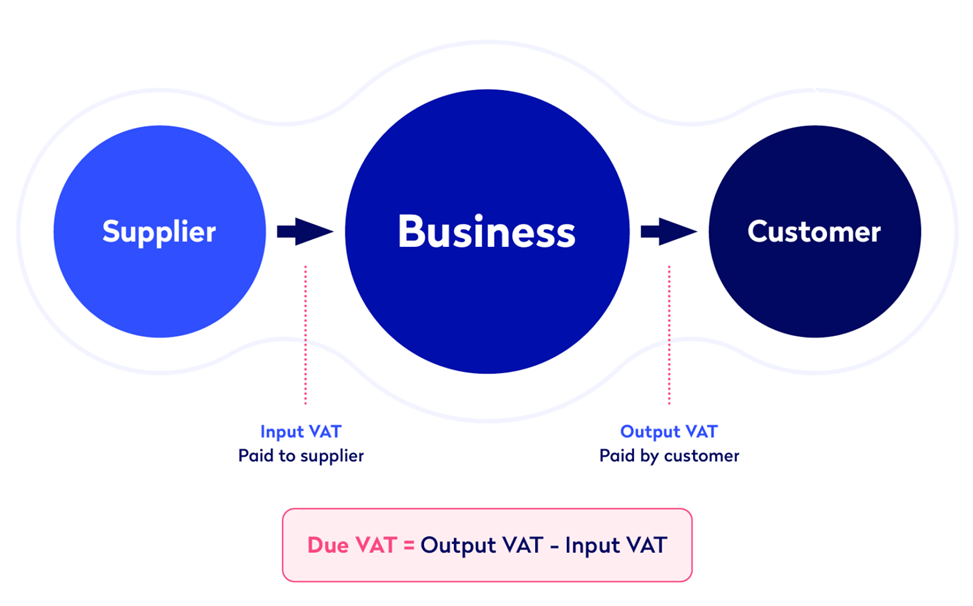
Value Added Tax (VAT) is a consumption tax on products and services at each step of production or delivery. When a firm sells products or services, it passes on the tax to the customer. Many nations, like the UAE, charge VAT as a percentage of the selling price.
VAT taxes the difference between sales taxes and purchase taxes for companies. Businesses may demand VAT refunds from tax authorities if they paid more VAT on purchases than sales.
VAT is crucial to the UAE government’s revenue generation and diversification away from oil. To avoid Federal Tax Authority fines and collect VAT, businesses must follow VAT laws.
Why Accurate VAT Filing is Crucial?
UAE firms must file VAT accurately, not merely for good practice. Incorrect VAT files may result in fines, penalties, or even criminal accusations. The Federal Tax Authority (FTA) enforces VAT compliance, and tax return disparities may lead to audits and investigations.
Failure to complete VAT returns properly might potentially have serious financial consequences. Late filings, underreporting tax liabilities, and inaccurate data result in an FTA penalty. These fines might swiftly drain your company’s finances. Repeated VAT reporting mistakes might lead to greater fines or legal action against the firm.
Besides financial loss, improper VAT filings may ruin your business’s image. It may damage your business’s reputation and compliance with local tax laws with customers, partners, and investors. Continuous FTA noncompliance may cost companies opportunities and slow development.
By reporting VAT correctly and on time, you avoid expensive fines and preserve a good company reputation, providing you peace of mind and the flexibility to concentrate on development and success.
Understanding VAT Returns
Companies must submit VAT returns to disclose the VAT they charged on sales and paid on purchases. These returns inform the Federal Tax Authority (FTA) about your business’s VAT activity, enabling them pay the proper amount. A VAT return reconciles what your firm owes or owes the government based on its VAT transactions over a period.
VAT return types vary by company filing frequency. Most UAE firms must file VAT returns monthly or quarterly, depending on taxable revenue. Larger companies that do a lot of business may file reports every month, while smaller companies may file reports every three months.
The FTA’s web portal simplifies the VAT submission process. Businesses may log onto the site, input sales and purchase information, and submit their return to the FTA. This digital VAT filing method is simpler, quicker, and more efficient. To avoid mistakes and fines, you must carefully analyze and check all of your effort before submitting it in.
Step-by-Step Guide to Filing VAT Returns
1. Gather Required Documentation
Before you fill out your VAT returns, you’ve to make sure that all of your necessary documents are accurate. This includes:
- Invoices: Get all sales invoices, including VAT. These should clearly show transaction data and VAT.
- Receipts and Tax Documents: Collect receipts from purchases of products and services that have VAT already paid for them. Include clear information about VAT amounts in these slips.
- Bank Statements and Payment Records: Use bank statements and payment records to verify VAT activities across payments and receipts. All records should show real money coming in and going out. Sort these documents by date and type to make filing for VAT easier. Classify sales and purchase transactions by taxable, exempt, or zero-rated products in distinct files. This clarifies VAT due and refundable calculations. A well-organised record-keeping system simplifies VAT filing and protects your firm against FTA audits.
2. Calculate VAT Payable
Calculate VAT for the tax period after collecting all documents. This includes two crucial calculations:
- VAT on Sales (Output Tax): Your customers pay this VAT on purchases. The UAE VAT rate is 5%; therefore, double the selling price by that.
- VAT on Purchases (Input Tax): The charge for products or services acquired for your firm. Purchase invoices usually reflect VAT.
To calculate VAT, subtract input tax from output tax. If your firm paid more VAT on purchases than sales, the FTA may reimburse you.
You must differentiate between VAT-exempt and VAT-taxable goods/services. This helps you calculate correctly.
3. Review VAT Payments and Credits
Check the VAT credits and payments to make sure you collect the right amount. Follow these steps:
- VAT Paid on Expenses: Make sure you are VAT-crediting the appropriate company costs. It is possible to claim VAT back on office materials, energy, and other business purchases. Do not make claim mistakes by not including all costs needed for the business to run.
- Bad Debts and Refunds: Follow the VAT paid on sales that have not been paid for or are marked as bad debts. You might need to remove bad debts from your VAT return if you have already paid VAT on them. Bad debt changes keep you from having to pay too much VAT under the FTA.
Check all records for missing transactions or VAT credits, since this might affect your VAT return and refund.
4. Complete the VAT Return Form
The VAT return form is available after collecting your documents and computing your VAT. Businesses may file VAT returns online via the FTA.
- Accessing Form: Enter your FTA credentials and go to the VAT refund section. In addition, select monthly or quarterly filing and open the VAT return form.
- Filling Out the Form: Enter amounts for output tax, input tax, and VAT payable/refundable. Refer to your manual to complete all fields correctly.
- Common Mistakes: Do not do things wrong, like using the wrong VAT rates, putting the wrong labels on your sales and purchases, or not having any bills. However, these mistakes could lead to problems, reports, and fines.
5. Verify and Submit the Return
Before filing your VAT return, check all information:
- Verify Calculations: Check that the amounts you calculated for VAT are correct. Furthermore, check the VAT amounts and rates again.
- Cross-Reference Documents: Verify figures in the return against invoices, receipts, and statements.
After reviewing everything, click submit on the FTA site. The FTA will submit your VAT return and provide you with a receipt. To avoid late filing penalties, file the return on time. To avoid penalties, pay VAT before the deadline.
Common Mistakes to Avoid While Filing VAT Returns
VAT returns are complicated, and even slight errors might result in fines or audits. Here are some typical mistakes to avoid while filing your return:
1: Missing or Incorrect Invoices
Common blunders include missing or inaccurate invoices, such as missing sales and purchase invoices or entering incorrect facts. If you miss an invoice, you might report less than or more than the correct amount of sales or purchases on your VAT return. Make sure all invoices account for VAT and reflect it.
2: Miscalculating VAT Payable or Refundable
Calculation mistakes are common while handling several transactions. Double-check your sales and purchase VAT figures. Small mistakes might cause big differences and costly penalties.
3: Failure to Report Exempt or Zero-Rated Supplies
In the UAE, some products and services are VAT-exempt or subject to zero tax. Not categorising items appropriately in your VAT return might result in noncompliance. Report sales and purchases of exempt or zero-rated products appropriately.
4: Not Submitting on Time
Failure to submit VAT returns on time may result in fines. You must file your return on time to avoid penalties. Set reminders to submit taxes and pay on time to be compliant.
Simplify Your VAT Filing Process with Alliance Prime
Alliance Prime Accounting & Tax Consultancy UAE knows VAT compliance may be complicated and time-consuming for companies. Our skilled accountants and tax experts will help you register, file, and comply with VAT properly and effectively.
Our VAT consultancy services include VAT registration, VAT returns, and VAT planning. Alliance’s knowledge of UAE tax laws and changes to regulations means that VAT returns are always correct and on time, which lowers the risk of fines or audits.
We handle your VAT tasks professionally, giving you peace of mind. Alliance Prime Accounting and Tax Consultancy UAE will help you avoid expensive errors and remain compliant. Get experienced VAT advice and help for your company now.
Conclusion
VAT reporting accuracy is crucial for UAE tax compliance and penalty avoidance. You may avoid audits and penalties by keeping accurate records, computations, and deadlines. For seamless filing, keep organised and up-to-date on tax laws. If you are uncertain or overwhelmed, expert advice may make all the difference. Our VAT return experts at Alliance Prime Accounting and Tax Consultancy UAE help you submit swiftly and properly. Contact us for VAT management ease.
Difference Between Zero Rated VAT and Exempted VAT
The Value-Added Tax (VAT) was introduced in the UAE at a rate of 5% on 1 January 2018, aimed at establishing a new revenue stream for the Government. Since its implementation, businessmen are still trying to cope with new rules and regulations regarding VAT and are still confused between Zero-Rated VAT and Exempted VAT.
Since the introduction of VAT in the UAE, many businesses continue to face challenges in understanding and adapting to the regulations. A common source of confusion lies in distinguishing between Zero-Rated VAT and Exempted VAT. Despite being in place for several years, these categories often cause uncertainty among business owners, as the differences in tax treatment can significantly impact compliance and financial planning.
Understanding the nuances between these two VAT classifications is essential to avoid potential errors and ensure proper adherence to the rules set by the FTA.
The below article will help you understand the VAT concept and the mechanism behind Zero-Rated and Exempt supplies.
What is Value Added Tax (VAT)?
Value Added Tax is a form of indirect tax levied on the consumption of certain goods and services. VAT is added at each stage of the supply chain and in the form of a consumption tax that is ultimately borne by the end customer.
What are the types of VAT?
VAT can be divided into three major categories, depending upon the nature of supplies:
-
Standard-Rated VAT:
This category includes goods and services that are subject to the standard VAT rate of 5%. The Government of UAE has provided a detailed list of these goods, as described below in this article.
-
Zero-Rated VAT:
This includes goods and services that are exported to any GCC country that has not implemented VAT. In such cases, these goods are charged 0% VAT.
-
Exempted VAT:
This category includes goods and services that are not charged with any VAT. It means that they don’t incur any input or output VAT charges.
What are Zero-rated supplies in the UAE?
Zero-rated supplies, as defined by Federal Decree-Law No. (8) of 2017 on Value Added Tax (UAE VAT Law), are taxable supplies for which a VAT rate of 0% VAT is applied. This means that although VAT is technically levied on these supplies, the final price to the customer reflects no VAT charge. However, businesses making zero-rated supplies are entitled to recover the input tax they incurred on purchases related to those supplies.

List of Zero-rated Goods and Services under VAT in UAE
As per Article 45 of the Federal Decree-Law no (8) of 2017 on Value Added Tax, zero-rated supplies are followed:
- Educational Services: Zero-rated items include private and public-school education (excluding higher education), higher education provided by institutions owned by the government or 50% funded by the government, nursery and pre-school education, certain school activities, and educational school trips.
- Exports: Export of goods and services outside the GCC implementing states.
- Basic Healthcare: Preventive and basic healthcare services provided by approved entities (as per specific controls).
- Transportation: This covers international transportation of passengers and goods (including intra-GCC), including related services. This includes international flights and certain passenger transport within the UAE.
- Means of Transport: This includes the supply of airplanes, ships, and other vehicles used for passenger and goods transport (as defined by UAE regulations). It also covers related supplies for their operation, repair, and maintenance.
- Rescue and Assistance: Supplies for aircraft and vessels specifically designed for air and sea rescue operations.
- In-flight Supplies: Food, drinks, and other items consumed onboard airplanes, ships, and other approved transportation during travel.
- Investment Precious Metals: Gold, silver, and other precious metals meet specific purity standards for investment purposes (as defined by UAE regulations).
- New Residential Buildings: The first sale or lease of newly built residential buildings within 3 years of completion (as per specific controls).
- New Charitable Buildings: The first sale or lease of buildings specifically used by charities (as per specific controls).
- Converted Residential Buildings: The first sale or lease of buildings converted from non-residential to residential use (as per specific controls).
- Oil and Gas: The supply of crude oil and natural gas.
These zero-rated supplies allow businesses to apply a 0% VAT rate while still enabling them to reclaim input VAT on purchases related to these supplies.
What are Exempt Supplies in UAE?
Exempt supplies, unlike zero-rated supplies, are not considered as a taxable supply. This means that no VAT is levied on these supplies, and businesses making exempt supplies are not entitled to recover any input tax they may have incurred on related purchases.
List of Exempted Goods and Services under VAT in UAE
In Article 45 of the Federal Decree-Law no(8) of 2017 on Value Added Tax, the following supplies are exempted from tax:
- Financial Services: Services offered by banks, investment firms, and other financial institutions, as defined in the UAE VAT regulations. This could include things like loans, investment products, interest on loans, credit cards, finance leasing, and money transfers.
- Domestic Transportation: Domestic passenger transportation, including flights within the UAE, is exempt.
- Insurance and Reinsurance: Life insurance and life reinsurance are exempt.
- Government Activities: Sovereign activities carried out by designated government bodies, which are not in competition with the private sector, are considered outside the VAT system and are effectively exempt.
- Not-for-Profit Organizations: Activities of foreign governments, international organizations, diplomatic bodies, and charitable activities listed by the Cabinet Decision are exempt. Non-business activities of not-for-profit organizations are also exempt.
- Resale of Existing Homes: This covers the sale or lease of any residential property that’s not considered a new build (first supply) under zero-rating (within 3 years). So, buying a used apartment and selling it later would be an exempt supply.
- Bare Land: The sale or lease of vacant land, meaning any land without a building on it.
- Local Public Transport: This includes bus services, metro systems, taxis, and any other form of public transportation operating within the UAE.
- Salaries: Activities undertaken by employees in the course of employment, including salaries, are outside the VAT system and considered exempt.
- Tax Group: Supplies between members of a single tax group are exempt.

Difference between Zero-Rated VAT and Exempted VAT
Businessmen are often confused by the terms Zero-Rated VAT and Exempted VAT due to their similar implication of no VAT being charged on certain goods or services. However, the two terms have distinct differences in how they affect businesses. While both categories result in no VAT being collected from the customer, the key distinction lies in input tax recovery: businesses dealing with zero-rated supplies can still reclaim VAT on their purchases, whereas those providing exempt supplies cannot. The differences between them and their implications for businesses are explained in more detail below.
-
Input VAT Recovery
Zero-Rated VAT: Businesses can recover the VAT paid on their expenses (input VAT) related to zero-rated supplies. This recovery reduces the overall tax burden, which is beneficial for maintaining cash flow.
Exempted VAT: Businesses cannot recover input VAT on expenses related to exempt supplies, which may increase operational costs as these are non-recoverable expenses.
-
Impact on Business Cash Flow
Zero-Rated VAT: Zero-rated supplies, being part of taxable turnover, require businesses to maintain detailed records and report them. However, the ability to reclaim input VAT can positively impact cash flow.
Exempted VAT: Exempt supplies do not form part of the taxable turnover, and businesses making only exempt supplies may not even need to register for VAT. This lack of registration means no input VAT recovery, potentially straining cash flow.
-
Vendor Registration and Compliance
Zero-Rated VAT: Vendors supplying zero-rated goods or services must register for VAT if their turnover exceeds the threshold, ensuring compliance with tax laws. They must also document all transactions to prove VAT eligibility.
Exempted VAT: Vendors dealing only in exempt supplies may not qualify for VAT registration, as their supplies are not taxable. This situation simplifies compliance but restricts input VAT recovery.
-
Pricing and Profitability
Zero-Rated VAT: Recovering input VAT enables businesses to keep their costs lower, allowing for more competitive pricing and potentially better profitability. These supplies still contribute to taxable turnover, requiring careful financial management.
Exempted VAT: Since exempt supplies do not contribute to taxable turnover, and no input VAT is recoverable, businesses may face higher operational costs. This scenario might necessitate higher pricing to maintain profitability.
-
Documentation and Reporting
Zero-Rated VAT: Vendors must document all transactions meticulously as part of the VAT reporting process, ensuring that they can claim input VAT deductions and remain compliant with tax regulations.
Exempted VAT: For exempt supplies, vendors have less stringent documentation requirements since they do not claim VAT deductions. This reduces administrative overhead but limits tax recovery options.
-
Taxable Turnover Inclusion
Zero-Rated VAT: Supplies are included in taxable turnover, impacting VAT registration thresholds and reporting obligations. This inclusion ensures that businesses remain integrated into the VAT system, allowing them to claim input VAT.
Exempted VAT: Supplies do not contribute to taxable turnover, which can lead to simpler accounting but may exclude businesses from VAT registration and the benefits of input VAT recovery.
Happy VAT Filing!
When it comes to VAT and taxation in the UAE, it’s crucial to have all aspects of your business model clarified and verified to ensure compliance with the rules and regulations. Hiring a professional VAT consultant is highly recommended to accurately categorize your transactions and services under Zero-rated or Exempt supplies. Doing so will help you avoid the risk of non-compliance and the penalties that come with it. Failure to properly distinguish between exempt and zero-rated supplies can cause significant issues during tax filing and returns. Although VAT laws in the UAE have been in place for a few years, it’s still essential to consult with an expert to navigate the complexities and reduce the risks of legal consequences.
Read more blogs:
Documents Required For VAT Registration in Dubai – UAE
The UAE has introduced Value Added Tax (VAT) since January 01, 2018. VAT is an indirect tax levied on the consumption of goods or services at the point of sale. Alliance Prime offers streamlined and hassle-free VAT registration services in the UAE.
Below is the list of documents necessary for VAT Registration in the UAE. Submit the required documents, complete the VAT registration process, and download the VAT Certificate online. You can now easily register for VAT and make VAT payments online through the EmaraTax Platform!
VAT Registration Requirements in UAE
A business is obligated to register for VAT when its taxable supplies and imports surpass the compulsory VAT registration threshold, which is set at AED 375,000. Additionally, a business has the option to undergo voluntary VAT registration if the total value of its taxable supplies and imports, or taxable expenses, exceeds the voluntary VAT registration threshold of AED 187,500.
Documents required for VAT registration in UAE
To register for VAT in the UAE, businesses need to complete the necessary documents, and the registration and fee submission process will take place online. The following documents are required for the registration of UAE VAT:
- Copy of Trade License (must not be expired).
- Passport copy of the owner/partners who own the license (must not be expired).
- Copy of Emirates ID of the owner/partners who owns the license (must not be expired).
- Memorandum of Association (MOA) – (not required for sole establishments).
- Contact details of the company (complete address and P.O Box).
- Concerned person’s contact details (Mobile Number and E-mail).
- Bank Details (Account Number, Account Name, Bank Name, Branch Name & IBAN).
- Turnover Declaration for the last 12 months (must be signed, stamped and printed on company letterhead).
- Business is doing export and import
- Business is dealing with any custom department? If yes, then attach the VAT Registration Letter.
- Other documents (Depending on the business)
VAT Registration Timeline
Document submission for VAT registration will be conducted online. Following the online VAT registration process, you can expect to receive the Tax Registration Number (TRN) from the Federal Tax Authority (FTA) within a timeframe of 2 to 3 working weeks.
VAT Registration in Dubai
In the UAE, VAT will be applied at every stage of the supply chain, with a tax rate of 5 percent. Typically, the end-user bears the cost of VAT, while businesses, acting as intermediaries, collect the tax on behalf of the government. For businesses exempt from VAT, there is an opportunity to claim a VAT refund from the government. Our VAT Refund Services in Dubai offer a straightforward and convenient way to facilitate this process.
How to register for Tax Registration Number (TRN) in UAE?
To undergo VAT registration, certain official documents are mandatory. Prior to submitting an application, it is essential to complete specific important documents. Businesses will obtain a Tax Registration Number (TRN) in the form of a VAT certificate through the submission of these official documents.
To acquire the VAT certificate, the process involves logging in to Emaratax using your FTA account or Emirate UAE ID pass and registering for VAT, providing the necessary documentation. Following the FTA’s approval of the registration, you will receive the official VAT Certificate.
Here is how you download UAE VAT Certificate in Emaratax
Each VAT certificate will be assigned a unique identification number, which plays a crucial role in facilitating all tasks related to VAT in the UAE.
VAT Registration Services in UAE
Alliance Prime is equipped with a team of thriving VAT specialists who can help your business to overcome expected roadblocks such as lack of familiarity with VAT rules & regulations, structure and compliance issues, lack of resources and lack of a compliant accounting system by providing best accounting services and VAT services. Our top-notch accounting and VAT services are designed to address these concerns. If you require VAT registration services in the UAE, don’t hesitate to reach out to Alliance Prime for support.
UAE Corporate Tax Registration Mandatory for Medium and Small Enterprises, Even with Losses
As the UAE embarks on its first full-year corporate tax period, a crucial revelation demands the immediate attention of medium and small business owners. Contrary to some misconceptions, the latest news mandates the corporate tax registration, a requirement applicable to both profit-making and loss-incurred enterprises.
Corporate Tax in UAE is a direct tax imposed on the net income or profit of corporations and businesses introduced by the UAE Ministry of Finance. This tax reform is designed to support medium and small enterprises by instituting an initial statutory tax rate of 9% on corporate profits exceeding AED 375,000. It is obligatory to comply with the corporate tax regulations for all eligible Taxable Persons in the UAE. This involves corporate tax registration, filing annual tax returns, and maintaining accurate accounting records.
Moreover, the introduction of corporate tax in UAE is to meet the international tax standards.
Corporate Tax Registration: A Non-Negotiable Step in 2024
The Federal Tax Authority has left no room for ambiguity – all businesses operating in the UAE are obligated to register for corporate tax in 2024. This directive extends to enterprises, irrespective of their profitability or the duration of their establishment. Even businesses incurring losses are not exempt from this mandatory registration.
Despite lingering doubts among some SME owners about the urgency of corporate tax registration, experts emphasize its immediate necessity. Waiting until profits approach the Dh375,000 profit mark is a misconception that could lead to non-compliance.
Small Business Relief: A Lifeline for Eligible Entities
To address concerns, the authorities have introduced the ‘Small Business Relief’ option. Eligible taxable persons, especially those with revenues below or equal to Dh3 million, can elect for this relief on their tax return. However, even if a business qualifies for relief, the fundamental requirement remains unchanged – registration for corporate tax is mandatory.
Key Points about Small Business Relief
- Eligibility is determined by business revenue below or equal to Dh3 million for the latest and all previous tax periods.
- Once revenue exceeds Dh3 million, the business is ineligible for the relief package, even if subsequent revenues fall below the threshold.
- Despite relief, businesses must register for corporate tax, emphasizing the mandatory nature of registration for all.
Essential Considerations for Corporate Tax Compliance
As the registration process opened in June last year, businesses following the calendar year as their financial year will be paying their 2024 corporate tax by September 2025. It’s crucial for businesses to prove eligibility by submitting tax returns and maintaining necessary records.
The application of UAE Corporate Tax extends to all businesses “incorporated, effectively managed and controlled” in the UAE. Regardless of profit or revenue, registration is a non-negotiable step.
Comparing VAT and Corporate Tax
Drawing a comparison with VAT requirements, the threshold for corporate tax registration is mandatory, aligning with the ethos of a proactive approach. Even new businesses setting up in the UAE are advised to register for corporate tax immediately.
In conclusion, navigating the corporate tax landscape is essential for businesses in the UAE. The Alliance Prime team recommends the use of accounting software as part of best practices.
Stay informed, stay compliant. Act now to register for corporate tax and ensure the smooth operation of your business in accordance with the latest regulations.
Why is Alliance Prime the best Tax Consultancy in Dubai?
Alliance Prime is a leading provider of auditing, accounting, taxation, and advisory services in the UAE. Our expert team will guide you through the complex laws and regulations of UAE, including Corporate Tax, VAT, Excise Tax, Accounting and Bookkeeping, ESR, Financial Advisory, ERP, etc. We stay up-to-date with the latest changes in laws and regulations in the UAE. If you’re looking for reliable and professional auditing, accounting, taxation, and advisory services in the UAE, look no further than Alliance Prime.
Contact Alliance Prime on +971 58 825 7795 or Email us at:- contact@alliance-acc.com for expert assistance in Corporate Tax Registration.
VAT Consultants in the UAE: Your Partners in Value-Added Tax
The United Arab Emirates (UAE) has solidified its position as a global business hub, attracting entrepreneurs and businesses from around the world. Central to the business landscape in the UAE is the implementation of Value Added Tax (VAT), a critical component in the region’s economic framework. Since the introduction of VAT in 2018, businesses in the UAE have faced the complex task of navigating the intricate web of VAT regulations. In this dynamic environment, the expertise of VAT consultants in the UAE, such as Alliance Prime, has become increasingly essential in ensuring businesses remain compliant and successful.
VAT Consultants in the UAE: Streamlining Compliance Efforts
VAT consultants in the UAE play a crucial role in guiding businesses through the intricacies of the VAT system. From providing assistance with VAT registration and de-registration to offering strategic tax planning and comprehensive VAT auditing, these consultants ensure businesses can effectively navigate the constantly evolving VAT landscape in the UAE. Alliance Prime Accounting and Tax Consultancy is a notable example of top VAT consultants in Dubai, providing comprehensive VAT consultancy and support services to businesses across the UAE.
The Benefits of Partnering with VAT Consultants in the UAE
Partnering with VAT consultants in the UAE, such as Alliance Prime, offers businesses a range of benefits. Firstly, it reduces the risk of non-compliance and associated penalties, ensuring businesses can focus on their core operations without the burden of intricate tax regulations. Secondly, it enhances VAT efficiency and cash flow, optimizing financial management and enabling businesses to allocate resources effectively. Additionally, VAT consultants provide businesses with peace of mind, knowing that their VAT affairs are in capable hands, allowing them to concentrate on their growth and development. The expertise and support provided by VAT consultants in the UAE ensure businesses have access to reliable advice and guidance, enabling them to make informed decisions and strategies for their VAT management.
How VAT Consultants Can in the UAE Help Businesses?
- VAT registration and compliance
- VAT health checks and risk assessments
- VAT training for employees
- VAT return preparation and filing
- VAT accounting and reporting
- VAT planning and optimization
- Representation in audits and disputes
Why Engage VAT Consultants in the UAE
In the UAE, VAT is a mandatory requirement for businesses with a taxable turnover exceeding AED 375,000. Failure to register and comply with VAT regulations can result in hefty penalties and potential legal repercussions. Engaging experienced VAT consultants in UAE offers a multitude of benefits, including:
- Expertise and Guidance: VAT consultants possess in-depth knowledge of UAE VAT laws, regulations, and procedures, providing expert guidance to businesses on all aspects of VAT compliance.
- Streamlined Registration Process: VAT consultants handle the intricate registration process, ensuring your business is properly registered with the Federal Tax Authority (FTA) and obtains its Tax Registration Number (TRN).
- Continuous Compliance: VAT consultants stay abreast of the latest VAT updates and amendments, ensuring your business remains compliant with evolving regulations.
- Accurate VAT Calculations and Returns: VAT consultants possess the expertise to accurately calculate your business’s VAT liability and prepare timely and accurate VAT returns.
- Tax Planning and Optimization: VAT consultants can identify opportunities to minimize your tax burden through strategic planning and optimization techniques.
- Representation in Audits and Disputes: In case of VAT audits or disputes, VAT consultants represent your business before the FTA, safeguarding your interests and ensuring fair resolution.
Guidance for Businesses in the UAE
For businesses operating in the UAE, adhering to VAT regulations is critical. Understanding the essential guidelines for VAT compliance is essential. Businesses should ensure they register for VAT if their taxable turnover exceeds AED 375,000 per annum and issue VAT invoices for all taxable sales. They must also file VAT returns quarterly and pay their VAT liability on time to avoid penalties and maintain a positive standing with the Federal Tax Authority (FTA). By following these guidelines, businesses can navigate the complexities of VAT compliance more effectively, with the support of experienced VAT consultants.
Selecting the Right VAT Consultant
Choosing the right VAT consultant in the UAE is crucial for businesses seeking effective VAT management. Businesses should consider the consultant’s experience and expertise in UAE VAT laws and regulations, their track record of success in assisting businesses with VAT compliance, and their reputation for providing high-quality and reliable services. Moreover, competitive fees and a personalized approach to servicing clients are also important factors to consider when selecting a VAT consultant in the UAE. Alliance Prime stands out as a reputable and experienced VAT consultancy firm in the UAE, offering specialized services tailored to various industries.
Alliance Prime: Your Trusted Partner in VAT Consultancy Services
Alliance Prime is a leading accounting and tax consultancy firm in the UAE, offering a comprehensive range of VAT consultancy services to businesses of all sizes. With a team of experienced and qualified VAT consultants, Alliance Prime assists businesses in all aspects of VAT compliance, from registration and deregistration to filing VAT returns and conducting VAT audits. Moreover, their specialized VAT consultancy services cater to various industries, including construction, healthcare, and financial services, ensuring businesses receive tailored and industry-specific guidance for their VAT management. By partnering with their VAT experts, you can rest assured that your business is in the hands of experienced professionals who are dedicated to ensuring your VAT compliance and maximizing your tax savings.
Conclusion
In the competitive business environment of the UAE, compliance with VAT regulations is essential for sustainable business growth. VAT consultants in the UAE, such as Alliance Prime, provide businesses with the expertise and support needed to navigate the complexities of the VAT landscape, ensuring compliance, efficiency, and financial stability. With their personalized approach and industry-specific services, Alliance Prime serves as a reliable and trusted partner for businesses seeking effective VAT consultancy services in the UAE. Contact Alliance Prime today to explore how their VAT consultancy services can help your business achieve VAT compliance and optimize its financial management in the UAE.
VAT Consultants in the UAE: Your Partners in Value-Added Tax
Navigating the complexities of Value-Added Tax (VAT) can be a daunting task for businesses operating in the United Arab Emirates. With its intricate regulations and ever-changing guidelines, staying compliant can be a full-time job, diverting valuable resources away from core business operations. This is where VAT consultants in UAE, like Alliance Prime, step in to become your trusted partners in value-added tax, ensuring seamless compliance and maximizing tax efficiency.
Tax Consulting Services in UAE: Expert Advice for Your Business
Alliance Prime, a leading consultancy in the UAE, specializes in providing comprehensive tax consulting services for businesses of all sizes. With a highly skilled and experienced team, we are committed to offering expert advice and solutions tailored to meet your specific tax needs. From corporate tax consulting services to value-added tax (VAT) advisory and excise tax consulting services, we cover a wide range of areas to ensure that your business complies with the latest tax regulations and maximizes its financial potential. Let us guide you through the intricacies of tax management and help you navigate the complex world of taxation seamlessly.
Significance of Tax Consulting Services in the UAE
Tax consultants in Dubai play a critical role in supporting businesses for various reasons:
- Expertise and Knowledge: Tax consultants in the UAE possess comprehensive knowledge of tax regulations, including VAT and Corporate Tax. They stay updated with the latest changes in VAT rules, ensuring businesses remain compliant. With a deep understanding of the intricacies of tax laws, these consultants can provide valuable advice to minimize tax liabilities and maximize tax recoveries for businesses.
- Adherence to Compliance: Adhering to tax compliance is imperative for businesses in Dubai, as non-compliance can lead to substantial penalties. Tax consultants in Dubai assist companies in maintaining compliance with tax regulations, thereby avoiding potential fines or penalties.
- Time Efficiency: VAT compliance can be a time-consuming process, particularly for businesses unfamiliar with tax regulations. Outsourcing VAT compliance to a tax consultant enables businesses to concentrate on their core operations, saving valuable time and resources.
- Cost-Effectiveness: Tax consultants in the UAE aid businesses in identifying opportunities to optimize their VAT positions, ultimately reducing tax liabilities and maximizing tax recoveries. This can lead to significant cost savings for businesses in the long term.
- Peace of Mind: t
Value Added Tax (VAT) Services in the UAE
The introduction of the Value Added Tax (VAT) law in the UAE has significantly impacted businesses across various sectors. At Alliance Prime, we understand the importance of complying with VAT regulations and offer specialized services to help you navigate this complex landscape. Our VAT services include comprehensive guidance on understanding the implications of VAT on your business, planning for VAT implementation, and ensuring legal compliance with filing and registration requirements. With our detailed understanding of the technical aspects of VAT, we can assist you in adapting your business systems and processes to adhere to the new VAT regulations effectively.
Excise Tax Consulting Services
Our excise tax consultation services are tailored to assist businesses in understanding and complying with excise tax regulations in the UAE. With our in-depth knowledge of excise tax requirements, we provide expert guidance on excise tax implications for your business, helping you to ensure proper compliance and minimize any potential tax-related risks. We work closely with businesses to streamline their excise tax management processes, enabling them to make informed decisions and operate within the legal framework set by the UAE government.
Corporate Tax Services in UAE?
In the UAE, businesses are required to comply with tax laws and regulations set by the government. Corporate tax will be levied at 0% for taxable income up to AED 375,000 and 9% for taxable income over AED 375,000. Large multinational corporations that fulfill particular requirements related to ‘Pillar Two’ of the OECD Base Erosion and Profit Shifting initiative will be taxed at a different rate. Corporate tax services help companies to navigate this new complex tax system and ensure compliance with tax regulations.
Country by Country Reporting and Economic Substance Regulations
Our consultancy services extend to assisting businesses in understanding the intricacies of country-by-country reporting and economic substance regulations in the UAE. We provide guidance on the applicability and compliance of these regulations, ensuring that your business meets the necessary requirements set forth by the authorities. By offering comprehensive insights and actionable strategies, we help businesses navigate these complex reporting requirements effectively.
Importance of Tax Consulting Services
Tax consulting services play a crucial role in ensuring that businesses in the UAE adhere to the country’s taxation laws and regulations. With the support of experienced tax consultants, businesses can mitigate potential risks, optimize their tax positions, and ensure compliance with the latest tax requirements. From offering strategic tax planning to providing guidance on tax computation and compliance, tax consultants are instrumental in helping businesses manage their tax-related obligations efficiently.
Benefits of Tax Consulting Services
Engaging the services of a tax consultant brings numerous benefits for businesses operating in the UAE. From providing essential information and advice on tax matters to assisting with tax return filing and audits, tax consultants play a pivotal role in streamlining business operations and ensuring regulatory compliance. By staying updated with the latest changes in taxation policies, tax consultants help businesses make informed decisions and implement effective tax management strategies. Their expertise in handling complex tax issues and providing tailored solutions enables businesses to minimize tax liabilities and avoid potential penalties, ensuring peace of mind and financial stability.
International Tax Services in the UAE
Navigating the complexities of international tax laws can be challenging for businesses expanding their operations globally. Our specialized international tax services focus on providing comprehensive assistance in structuring cross-border transitions, tax planning, and understanding double taxation treaties. We work closely with the Ministry of Finance to ensure that you gain the necessary certificates, such as value-added tax certificates and tax residency certificates, essential for conducting international business in the UAE. Our team has a deep understanding of international tax implications and can guide you through the process to ensure that your business remains compliant and tax-efficient.
Why Choose Alliance Prime for Your Tax Consulting Services?
Alliance Prime stands out as one of the premier choices for businesses seeking reliable and professional tax consulting services in the UAE. With a team of qualified financial professionals and tax experts, we are committed to providing comprehensive solutions that address your specific business requirements. Our tailored approach to tax consulting ensures that we understand your business intricacies and offer customized strategies to optimize your tax positions and ensure compliance with the latest regulations. By leveraging our expertise and industry knowledge, you can navigate the complexities of the UAE’s tax landscape seamlessly and focus on achieving your business objectives. Contact us today to learn more about our services and how we can support your business’s need for tax consulting services.
Importance of VAT Registration in UAE
VAT registration is a crucial requirement for corporate entities in the UAE, and it involves submitting necessary documents to the Federal Tax Authority (FTA) through an online portal. In this article, let us discuss the significance of VAT registration in UAE and the need for accurate financial records to comply with tax regulations in the UAE.
Mandatory VAT Registration in UAE
For companies whose taxable supply and imports exceed AED 375,000, VAT registration is mandatory. Additionally, businesses can voluntarily register for VAT if their taxable supply and imports (or taxable costs) exceed AED 187,500. Failure to register for VAT within the specified timeframe may lead to penalties and legal consequences.
VAT Registration Process in UAE
Dubai is renowned for its business-friendly environment, and its tax regulations adhere to international standards, being cost-effective, efficient, and transparent. VAT registration requirements in Dubai are straightforward, open, and convenient. Upon successful registration, businesses receive a VAT certificate confirming their compliance with tax obligations.
What are the Documents for VAT Registration in the UAE?
VAT registration in the UAE requires the submission of necessary documentation. Businesses must provide the following documents for the registration process:
- Business Trade License or Commercial License
- Passport copies of the owner or partners as mentioned on the license
- Emirates ID of the owners/partners as per the business license
- Memorandum of Association (MOA)
- Complete Company Address
- Contact details of the authorized signatory, including email and phone number
- Company Bank Details, including the IBAN letter
- Details of any branches, if applicable
- Turnover Declaration, signed and stamped by the owner or manager
- Expected revenue, turnover, and taxable expenses for the next 30 days
- Information about GCC export or import activities
- Custom code along with a copy of the Dubai Customs letter, if applicable
- Preference for registration as a tax group
Additional documents or authorizations may be required based on the business activity and jurisdiction.
Benefits of VAT Registration in UAE
VAT registration offers several advantages to businesses. It enhances the company’s reputation and client preference, as customers are more inclined to trust a VAT-registered company. Registering for VAT also ensures compliance with tax laws, preventing penalties and legal issues.
Accurate Financial Records for VAT Compliance
Maintaining accurate financial records is crucial for calculating taxes correctly and demonstrating compliance with VAT regulations. Proper financial record-keeping helps businesses avoid both overpayment and underpayment of taxes, contributing to financial stability and client confidence.
Importance of Tax Group Registration in UAE
Businesses in the UAE can apply for tax group registration, allowing several enterprises of various types to form a tax group. The FTA will issue a single Tax Registration Number (TRN) for the entire group. The representative company of the group must submit the application for tax group registration, and specific criteria must be met by each potential member of the tax group.
Rely on Alliance Prime for VAT Registration in UAE
Alliance Prime Accounting & Tax Consultancy is a trusted tax consulting firm that provides comprehensive solutions for VAT registration services in Dubai and throughout the UAE. The firm assists in compiling the necessary documentation for VAT registration and guides businesses through the online registration process. With a team of experienced tax consultants, Alliance Prime ensures a smooth and efficient VAT registration process.
Why is Alliance Prime the best Tax Consultancy in Dubai?
Alliance Prime is a leading provider of auditing, accounting, taxation, and advisory services in the UAE. Our expert team will guide you through the complex laws and regulations of UAE, including Corporate Tax, VAT, Excise Tax, Accounting and Bookkeeping, ESR, Financial Advisory, ERP, etc. We stay up-to-date with the latest changes in laws and regulations in the UAE. If you’re looking for reliable and professional auditing, accounting, taxation, and advisory services in the UAE, look no further than Alliance Prime.
For any VAT or related enquiry, visit localhost/alliance-acc/ or contact us at- +971 58 825 7795 or Email us at:- contact@alliance-acc.com