Category: Corporate Tax
UAE Corporate Tax Deadline 30 September 2026: What Businesses Need to Know

The UAE Corporate Tax deadline of 30 September 2026 is approaching for businesses whose relevant Tax Period ended on 31 December 2025. Companies falling within this filing cycle should ensure that their Corporate Tax Return is prepared and submitted on time and that any Corporate Tax payable is settled within the applicable deadline.
Corporate Tax compliance is not only about meeting a filing date. Businesses need accurate financial records, appropriate tax calculations, supporting documentation, and a clear understanding of the adjustments that may apply when determining taxable income.
If your business has a Tax Period ending on 31 December 2025, now is the time to review your Corporate Tax position and prepare for the upcoming deadline.
Key UAE Corporate Tax Filing Dates Businesses Should Know in 2026
Under the UAE Corporate Tax framework, a Taxable Person is generally required to file a Corporate Tax Return within nine months from the end of the relevant Tax Period.
This means that businesses with a Tax Period ending on 31 December 2025 generally have a Corporate Tax filing deadline of:
30 September 2026
Any Corporate Tax payable for that Tax Period is also generally required to be paid within the applicable nine-month period.
Therefore, affected businesses should plan for both Corporate Tax return filing and payment rather than treating them as separate year-end obligations.
Which UAE Businesses Need to File by 30 September 2026?
The 30 September 2026 Corporate Tax deadline does not apply to every business in the UAE.
It is relevant to Taxable Persons whose applicable Tax Period ended on 31 December 2025, subject to their individual circumstances and any specific rules that may apply.
For example:
Tax Period End: 31 December 2025
Corporate Tax Return Deadline: 30 September 2026
Corporate Tax Payment Deadline: 30 September 2026
Businesses with a different financial year or Tax Period may have a different filing deadline.
For this reason, companies should verify their registered Tax Period rather than assuming that 30 September applies automatically.
What Should Businesses Complete Before 30 September 2026?
Businesses approaching their UAE Corporate Tax filing deadline should start preparing well before the final date.
1. Review Your Accounting Records
Accurate accounting records provide the foundation for Corporate Tax calculations.
Businesses should make sure that income, expenses, assets, liabilities and other relevant transactions have been properly recorded and supported by appropriate documentation.
Any inconsistencies should ideally be identified and addressed before preparing the Corporate Tax Return.
2. Determine Your Taxable Income
Why Your Accounting Profit May Differ From Your Taxable Income?
Depending on the circumstances of the business, adjustments may be required when calculating taxable income under UAE Corporate Tax rules.
This makes it important to review the company’s financial information carefully and determine the appropriate tax treatment of relevant transactions.
3. Review Deductible and Non-Deductible Expenses
Not every business expense will necessarily receive the same treatment for Corporate Tax purposes.
Companies should review their expenses and supporting documentation to determine whether the relevant costs satisfy the applicable requirements for tax deductibility.
A proper review can help reduce the risk of incorrect deductions or inaccurate Corporate Tax calculations.
4. Check Related-Party Transactions
Businesses that have transactions with related parties or Connected Persons should consider whether additional Corporate Tax requirements apply.
The nature of the transactions, pricing arrangements and supporting documentation should be reviewed as part of the Corporate Tax preparation process.
5. Assess Available Reliefs and Applicable Tax Treatments
Depending on the business and its circumstances, specific Corporate Tax reliefs, exemptions or other tax treatments may be relevant.
Eligibility should not be assumed. Businesses should assess the applicable conditions and maintain the necessary supporting information before relying on a particular treatment.
6. Calculate the Corporate Tax Payable
Once taxable income and the relevant adjustments have been determined, the business can calculate its Corporate Tax liability for the Tax Period.
This should be completed early enough to allow management to review the calculation and prepare for any payment due.
7. File the Corporate Tax Return
The Corporate Tax Return should be submitted through the applicable Federal Tax Authority (FTA) platform by the relevant deadline.
Businesses should avoid waiting until the final day to file. Preparing early provides additional time to resolve discrepancies, obtain missing documents and address any issues that may arise during the filing process.
8. Pay Any Corporate Tax Due
Filing the return is only part of the compliance process.
Where Corporate Tax is payable, businesses should ensure that the amount due is settled within the applicable payment deadline.
For a Tax Period ending on 31 December 2025, the relevant filing and payment deadline will generally be 30 September 2026.
Why Early Corporate Tax Preparation Matters
Waiting until September to begin preparing a Corporate Tax Return can create unnecessary pressure.
Depending on the size and complexity of the business, preparation may involve reviewing financial statements, reconciling accounting records, checking tax adjustments, analysing related-party transactions and collecting supporting documentation.
Starting early gives businesses more time to identify and correct potential issues.
It also allows management to understand the expected Corporate Tax liability in advance, which can support better cash-flow planning.
The Consequences of Filing Your UAE Corporate Tax Return Late
Failure to comply with UAE Corporate Tax requirements may result in administrative penalties under the applicable UAE tax legislation.
Late filing or late payment can therefore create additional financial and compliance consequences for a business.
Instead of waiting until the deadline is close, businesses should establish an internal Corporate Tax compliance calendar and ensure that the responsible teams, accountants and tax advisers have sufficient time to complete the required work.
September 2026 Corporate Tax Preparation Guide for UAE Businesses
If your Corporate Tax deadline is 30 September 2026, consider reviewing the following before filing:
- Confirm the correct Tax Period and filing deadline.
- Ensure accounting records are complete and accurate.
- Review financial statements and reconciliations.
- Identify relevant Corporate Tax adjustments.
- Review deductible and non-deductible expenses.
- Check related-party and Connected Person transactions.
- Assess whether any available reliefs or special tax treatments apply.
- Calculate the expected Corporate Tax liability.
- Organise supporting documents and records.
- Prepare and review the Corporate Tax Return.
- Arrange payment of any Corporate Tax due.
- Submit the return before the applicable deadline.
Don’t Leave Your Corporate Tax Filing Until the Last Minute
For businesses with a Tax Period ending on 31 December 2025, 30 September 2026 is an important UAE Corporate Tax filing and payment deadline.
Businesses should use the remaining time to review their records, determine their taxable income, calculate their Corporate Tax liability and prepare an accurate return.
Early preparation can help reduce filing errors, improve compliance and give businesses greater confidence when meeting their UAE Corporate Tax obligations.
Need Support With Corporate Tax Filing in the UAE?
Alliance Prime Accounting & Tax Consultancy supports businesses with UAE Corporate Tax compliance, from reviewing financial records and determining taxable income to preparing and filing Corporate Tax Returns.
If your business is approaching the 30 September 2026 Corporate Tax deadline, our team can help you understand your obligations and prepare your filing accurately and on time.
Book your FREE consultation with Alliance Prime today and get your Corporate Tax filing ready before the deadline.
Disclaimer: This article is provided for general informational purposes only and does not constitute tax, accounting or legal advice. Corporate Tax requirements and deadlines may vary depending on the circumstances of each Taxable Person. Businesses should review the applicable UAE legislation and Federal Tax Authority guidance or obtain professional advice regarding their specific circumstances.
Corporate Tax Planning Strategies for Dubai Businesses

Corporate tax in the UAE has changed how companies handle their finances. Businesses in Dubai focus on profit growth and also on following tax laws closely. Every company needs a clear corporate tax strategy in Dubai. This ensures stability, transparency, and lasting success.
At Alliance Prime Accounting & Tax Consultancy, we are an approved FTA tax agent. We help businesses plan their taxes effectively. This way, they can stay ahead of regulatory changes. With expert help and solid financial planning, companies can save on taxes in the UAE. This also helps them build a sustainable future.
Why Corporate Tax Planning Matters
Corporate tax planning helps businesses save money, manage profits, and follow FTA rules. Many companies put off tax planning until year-end. This can cause missed deductions or penalties. A strong corporate tax strategy in Dubai improves this. It relies on smart financial management throughout the year.
When businesses grasp their tax duties early, they can:
- Organize documents
- Spot eligible deductions
- Shape operations for tax efficiency in the UAE.
This boosts compliance and cash flow. Companies gain more room to invest and grow.
Key Principles of a Corporate Tax Strategy Dubai
An effective tax strategy requires organization, clarity, and consistent review. Below are key principles that help businesses manage corporate tax efficiently in Dubai.
1. Keep Transparent Financial Records
Every business should maintain clear and detailed records of income and expenses. Well-organized data helps during audits and simplifies the calculation of taxable income. It also builds the foundation of a reliable corporate tax strategy Dubai.
2. Identify Allowable Deductions
Businesses can lower their taxes by claiming valid deductions. These include rent, employee salaries, utilities, and marketing costs. Tracking these costs correctly enhances tax efficiency UAE and prevents errors during filing.
3. Review Your Business Structure
Some company setups offer better tax benefits than others. Reviewing your legal structure can help you save on taxes and stay compliant. For example, some free-zone entities have special conditions that can affect taxation.
4. Build a Compliance Calendar
Missing deadlines can lead to penalties. Setting reminders for filing dates and review sessions keeps your team consistent. Timely filing also improves your company’s professional reputation with the FTA.
5. Seek Expert Guidance
Working with qualified professionals saves time and minimizes risk. Alliance Prime Accounting & Tax Consultancy is an approved tax agent by the FTA. We provide clear advice and craft a custom corporate tax strategy in Dubai. It fits your business model perfectly.
How to Improve Tax Efficiency UAE
To achieve tax efficiency in the UAE, manage your business to lower liability legally. The process involves three important steps:
1. Smart Investment Decisions
Businesses should analyze which investments qualify for deductions or tax benefits. Putting money into capital for a business can cut taxable income and enhance financial results.
2. Monitor Business Expenses
Consistent tracking of expenses throughout the year ensures that no deduction is missed. Digital tools and accounting systems make this easier by keeping accurate financial records.
3. Regular Financial Reviews
Check in every quarter or twice a year. This way, you can spot tax-saving options before the fiscal year ends. It also ensures that your financial data remains organized and ready for filing.
These simple actions boost tax efficiency in the UAE. They also help your company grow responsibly.
Common Tax Planning Mistakes to Avoid
Even well-managed businesses can make errors that increase tax liability. Some common mistakes include:
- Mixing business and personal expenses
- Ignoring early tax planning
- Missing filing deadlines
- Misunderstanding deductions and exemptions
- Relying on incomplete financial data
Avoiding these mistakes boosts your corporate tax strategy in Dubai. It also helps keep your credibility with authorities. Businesses that plan regularly face fewer compliance challenges and enjoy smoother audits.
The Role of Professional Tax Consultants
Corporate tax laws continue to evolve, and staying updated is essential. Experts can help your business meet FTA standards. They also keep you tax-efficient in the UAE.
At Alliance Prime Accounting & Tax Consultancy, we are an approved tax agent by FTA. Our team provides expert advice on every aspect of the tax process. We help you:
- Register correctly with the FTA
- Prepare and file accurate tax returns
- Identify allowable deductions and exemptions
- Develop cost-effective financial plans
- Avoid penalties through proactive compliance
Our goal is to turn tax obligations into opportunities. A solid plan and expert help can keep your company stable and profitable in Dubai’s tough market.
Practical Steps for Better Corporate Tax Planning
To design an effective and sustainable tax plan, follow these practical steps:
- Start Early: Plan your taxes before the financial year ends. Early preparation gives more flexibility in decision-making.
- Use Technology: Adopt accounting software that tracks income and expenses automatically.
- Schedule Reviews: Evaluate your tax strategy every quarter for accuracy and improvement.
- Train Your Staff: Make sure your finance team knows the latest tax laws and filing rules.
- Consult Professionals: Talk to experts regularly. This keeps your corporate tax strategy in Dubai up-to-date with FTA guidelines.
Follow these steps regularly. Your company will become more compliant and improve tax efficiency UAE over time.
Why Choose Alliance Prime Accounting & Tax Consultancy
Alliance Prime Accounting & Tax Consultancy is an approved tax agent by the FTA. We help businesses in Dubai and the UAE handle their corporate tax duties with ease. Our services include:
- Corporate tax registration and filing
- Ongoing tax planning and strategy development
- Financial audits and documentation reviews
- Industry-specific compliance support
- Personalized consultation for long-term growth
Our experienced consultants understand the local market and legal framework. We create simple, effective solutions that match your business goals. We also ensure full compliance with FTA requirements.
Conclusion
Tax planning is key for every successful business in Dubai. Planning ahead, keeping good records, and having a strong strategy help companies stay compliant and save on taxes in the UAE. A solid corporate tax plan in Dubai reduces financial risks and boosts growth.
At Alliance Prime Accounting & Tax Consultancy, we’re an FTA-approved tax agent. We assist businesses in crafting structured plans that increase efficiency, accuracy, and profitability. From planning to filing, our team ensures every step supports your long-term goals.
To boost your finances and simplify compliance, reach out to Alliance Prime today. Let our experts create a custom tax plan. This will keep your business compliant and confident, preparing you for the future.
Strategies to Reduce Corporate Tax Liabilities
Corporate taxes are a fact of business life. However, smart strategies can change them from a burden to an opportunity. The way you record expenses and structure your company shapes your tax liability. Every decision matters. Managing corporate tax well keeps your business compliant and protects its profits.
At Alliance Prime Accounting and Tax Consultancy, we’re an FTA-approved tax agent. We help companies in the UAE. We aim for legal and smart ways to cut tax bills and boost finances.
Understanding Corporate Tax
It is a direct tax on the profits a business earns. Remove valid expenses such as rent, salaries, depreciation, and professional services. What’s left is taxable income.
In the UAE, corporate tax is now part of a modern financial system. This change aligns with global practices. Most companies pay a standard tax rate of 9% on profits over the threshold set by the Federal Tax Authority (FTA).
The goal is simple: to maintain transparency and fairness while encouraging compliance. Many businesses still struggle to manage and lower this tax effectively.
Why Businesses Struggle with Corporate Tax
Common challenges include:
- Misunderstanding what expenses are deductible.
- Poor bookkeeping and record-keeping practices.
- Incorrect business structure selection.
- Lack of awareness about tax exemptions or incentives.
- Delayed filings and inaccurate documentation.
These issues often lead to higher liabilities, penalties, and unnecessary financial pressure. The good news is that all of this can be prevented with proper planning and professional support.
Key Strategies to Reduce Corporate Tax Liabilities
1. Keep Accurate and Transparent Financial Records
Maintaining up-to-date financial records is the first step toward effective tax management.
- Record all business income, expenses, and assets promptly.
- Store supporting documents like receipts, invoices, and contracts.
- Reconcile your bank accounts monthly to avoid discrepancies.
“You cannot manage what you cannot measure and in taxation, precision is everything.”
Keeping accurate records makes tax filing easier. It also helps you claim all eligible deductions.
2. Optimize Your Business Structure
The structure of your business directly affects how much tax you pay.
- Limited Liability Companies (LLCs):A popular choice in the UAE for its flexibility.
- Free Zone Entities: Many free zones offer tax exemptions. These can be partial or complete, depending on specific conditions.
- Branches of Foreign Companies:These may require different reporting standards.
Before starting or changing your business, get professional advice. This helps you pick a structure that lowers taxes while keeping you compliant.
3. Utilize Allowable Deductions and Tax Credits
Many business expenses qualify as deductible. However, many companies fail to document or claim them correctly. Common deductible expenses include:
- Salaries, wages, and staff benefits.
- Office rent and operational costs.
- Professional and consultancy fees.
- Repairs and maintenance.
- Depreciation of assets and equipment.
These deductions reduce taxable income and keep your financial reporting balanced.
4. Invest Strategically for Long-Term Savings
Investment decisions have tax implications. Smart planning allows you to reduce future tax payments while improving business capacity.
- Reinvest profits in new technology or automation.
- Purchase equipment that qualifies for depreciation or capital allowance.
- Explore green or digital transformation projects that may attract tax benefits.
Every investment should fit your financial plan. It’s important for growth and smart tax positioning.
5. Carry Forward Business Losses
If your company had a financial loss in one year, UAE tax law may let you carry those losses forward. You can use them to offset future profits.
This approach:
- Reduces your future tax liability.
- Smooths out financial fluctuations.
- Supports business recovery after challenging periods.
However, these claims must be well-documented and meet the FTA’s requirements.
6. Monitor Cross-Border Transactions
For companies that do international trade or expand, dealing with tax in different regions can be hard.
- Review Double Taxation Agreements (DTAs)between the UAE and other countries.
- Ensure profits are correctly allocated between entities.
- Keep proper transfer pricing documentation.
This helps you avoid double taxation on the same income. It also keeps you compliant with local and international tax laws.
7. Take Advantage of Incentives and Exemptions
UAE tax regulations include incentives designed to support business innovation and growth. For example:
- Certain free zones offer tax exemptions for qualifying activities.
- Industries involved in renewable energy, technology, or manufacturing may receive special consideration.
- Charitable contributions and public-benefit projects may also be deductible in certain conditions.
To understand and apply these exemptions correctly, seek professional help. This ensures you stay compliant and have the right documentation.
8. Conduct Regular Tax Audits and Reviews
Periodic tax reviews identify inconsistencies before they lead to penalties. Internal audits also help align your accounting practices with FTA standards.
- Review quarterly reports for accuracy.
- Compare financial statements against tax submissions.
- Correct errors before filing deadlines.
This proactive approach saves time. It also builds a strong financial reputation for your business.
9. Stay Updated on Legal and Regulatory Changes
Corporate tax laws continue to evolve. Keeping your business informed ensures compliance and protects against penalties.
- Follow FTA updates regularly.
- Schedule annual sessions with your tax advisor.
- Train internal accounting teams on new tax procedures.
“The difference between a compliant company and a struggling one is awareness.”
How Alliance Prime Helps You Succeed
Alliance Prime Accounting and Tax Consultancy is an approved tax agent by the FTA. We offer a complete set of accounting and tax services. Our goal is to help your business stay compliant and lower tax liabilities.
Our core expertise includes:
- Corporate Tax Advisory:Tailored planning to structure your company for tax efficiency.
- Bookkeeping and Accounting:Transparent record management to ensure accurate filings.
- Tax Filing and Compliance:Full preparation and submission of FTA-compliant tax returns.
- Audit Support:Assistance during tax reviews and FTA audits.
- Business Structuring:Guidance on forming or restructuring entities for optimal taxation.
Our consultants keep up with all changes in UAE tax law. This helps businesses stay clear, accurate, and compliant with their finances.
Practical Tips for Everyday Tax Management
- Keep digital copies of all documents for easy access.
- Schedule monthly tax check-ins with your accountant.
- Avoid personal expenses in business accounts.
- File returns before deadlines to prevent penalties.
- Seek professional help whenever there’s uncertainty.
Small habits like these make a major difference over time.
Conclusion
Good corporate tax management isn’t just about following the rules. It’s a smart strategy for the future. Keep records accurate, plan investments wisely, and partner with professionals. This way, your company can lower tax liabilities and boost financial confidence.
Alliance Prime Accounting and Tax Consultancy is an approved tax agent by FTA. We support your business at every step. We manage it all. This includes bookkeeping, filing, tax planning, and audit preparation. Our goal is to simplify taxation so that you can focus on what truly matters: growth.
Contact us today for a consultation. Learn how we can help you save time, lower your taxes, and build a stronger financial future.
Corporate Tax Registration Deadlines for Free Zone in the UAE

The introduction of corporate tax in the UAE marks a transformative shift in the country’s taxation policies. While the UAE has traditionally been a tax-friendly environment for businesses, the introduction of corporate tax is a step toward aligning with global tax frameworks. As such, Free Zone businesses need to be well-versed in the new tax regime, particularly regarding corporate tax registration deadlines. Compliance with these deadlines is crucial to avoid penalties and ensure smooth operations.
This comprehensive guide will walk you through the corporate tax registration process for Free Zones in the UAE, the specific deadlines you need to keep in mind, and what happens if you miss these deadlines. For expert assistance, Alliance Accounting offers reliable and professional services to help businesses stay compliant and up-to-date with corporate tax requirements in the UAE.
Overview of Corporate Tax in the UAE
The UAE government introduced a federal corporate tax as part of its broader plan to diversify revenue streams and promote compliance with international tax standards, such as the OECD’s Base Erosion and Profit Shifting (BEPS) initiative. The corporate tax applies to most business activities and is designed to reduce reliance on oil revenues while ensuring the country’s fiscal sustainability.
Key Features of the UAE Corporate Tax Law
- Standard Corporate Tax Rate: Businesses with taxable income above AED 375,000 will be subject to a 9% corporate tax rate. This makes UAE one of the more competitive countries globally regarding corporate tax rates.
- Tax Exemption for Small Businesses: Businesses with taxable profits up to AED 375,000 are exempt from corporate tax, allowing smaller enterprises to continue benefiting from the tax-free environment.
- Special Provisions for Free Zones: Free Zone entities can benefit from a 0% corporate tax rate on qualifying income, provided they meet specific criteria. However, they are still required to register for corporate tax and file returns.
The introduction of corporate tax does not mean the end of the UAE’s tax advantages, especially for Free Zone companies. However, understanding the eligibility criteria, taxable income, and applicable deadlines is vital.
What Is a Free Zone?
Free Zones in the UAE are designated areas established to encourage foreign investment by offering tax incentives, simplified business regulations, and enhanced operational benefits. Businesses that operate in these zones benefit from favorable tax treatment and other advantages that help boost international trade and commerce.
Key Benefits of Free Zones:
- 100% Foreign Ownership: Unlike mainland businesses, Free Zone entities can be wholly owned by foreign investors without the need for a local sponsor.
- Exemption from Customs Duties: Businesses operating within Free Zones are typically exempt from customs duties on imports and exports, making it cost-effective for trading companies.
- No Personal or Export Taxes: Employees working in Free Zones benefit from no personal income tax, and companies have no tax on exports.
- Strategic Locations: Free Zones are located in key economic hubs, providing businesses access to top-tier infrastructure, transportation, and logistics facilities.
However, under the new UAE corporate tax law, Free Zone entities must register for corporate tax, even if they expect to benefit from a 0% corporate tax rate. The registration process and filing deadlines are essential to ensure compliance and avoid penalties.
Corporate Tax for Free Zones: What You Need to Know
Although Free Zone businesses may qualify for a 0% corporate tax rate on qualifying income, they are still obligated to register for corporate tax and maintain compliance with the regulations established by the Federal Tax Authority (FTA).
What Qualifies as Free Zone Income?
Free Zone businesses can benefit from a 0% corporate tax rate on “qualifying income,” which is income derived from specific activities within the Free Zone or transactions with other Free Zone businesses and non-residents. To ensure their income qualifies, businesses must adhere to the guidelines provided by the FTA.
Examples of Qualifying Income:
- Income generated from business activities within the Free Zone: This includes trading, manufacturing, or providing services to other Free Zone companies.
- Income from transactions with other Free Zone entities: Business dealings with other companies operating within Free Zones also fall under qualifying income.
- Income from transactions with non-UAE residents: If a Free Zone entity engages in international business with clients or companies outside the UAE, this income may also qualify for the 0% corporate tax rate.
Non-Qualifying Income
Not all income generated by Free Zone companies qualifies for the 0% tax rate. Income derived from business activities with mainland UAE companies or income from non-qualifying activities within the Free Zone may be subject to the standard 9% corporate tax rate.
Examples of Non-Qualifying Income:
- Income from mainland UAE: Any transactions or business activities conducted with mainland UAE entities, even by Free Zone companies, may be subject to the 9% corporate tax rate.
- Income from non-permissible activities: Activities that fall outside the permitted scope of the Free Zone’s allowed business operations may also be taxed at the standard rate.
Careful record-keeping and understanding of what constitutes qualifying and non-qualifying income are crucial to ensure that businesses maximize the benefits of operating within a Free Zone.
Corporate Tax Registration Deadlines for Free Zones in the UAE
Free Zone businesses are required to register for corporate tax regardless of whether they are eligible for the 0% corporate tax rate. Failure to meet registration deadlines can result in penalties, even for companies that have no corporate tax liability.
Important Corporate Tax Registration Deadlines:
- Initial Registration Deadline: The UAE’s Federal Tax Authority (FTA) has made it mandatory for businesses to register for corporate tax well before their first tax filing. Deadlines for registration will vary based on the business’s financial year, but it is advisable for businesses to register as early as possible.
- Corporate Tax Return Filing Deadline: Once registered, Free Zone businesses must file their corporate tax return within nine months following the end of their relevant financial year. This applies even if the business qualifies for the 0% corporate tax rate.
Example Deadlines for Common Financial Years:
- For financial years starting January 1 and ending December 31: The first corporate tax return must be filed by September 30, 2024.
- For financial years starting July 1 and ending June 30: The first corporate tax return must be filed by March 31, 2025.
- For financial years starting April 1 and ending March 31: The first corporate tax return must be filed by December 31, 2024.
Each business should verify its financial year with the FTA and confirm the corresponding registration and filing deadlines to avoid penalties.
Steps to Register for Corporate Tax in the UAE Free Zones
The registration process for corporate tax in the UAE is straightforward but requires attention to detail to ensure compliance. Below are the general steps Free Zone businesses should follow:
1. Access the FTA e-Services Portal
- Create an account on the Federal Tax Authority (FTA) e-Services portal. The portal allows businesses to manage their tax registration, filings, and payments online.
2. Provide Business Information
- Submit key details about your business, such as trade license number, Free Zone registration certificate, financial year, and corporate structure. The FTA may request additional documentation to verify the business’s eligibility for the 0% tax rate.
3. Receive Corporate Tax Registration Number (CTRN)
- Once the registration is submitted and approved, the FTA will issue a Corporate Tax Registration Number (CTRN), which must be used in all subsequent filings.
4. Maintain Records and Ensure Compliance
- Free Zone businesses must maintain detailed records of financial transactions and business activities to ensure compliance with the FTA’s corporate tax rules.
Businesses may find it beneficial to consult with professionals, such as Alliance Accounting, who can assist with the registration process and ensure timely compliance with the relevant deadlines.
Penalties for Missing Corporate Tax Registration Deadlines
Failure to register for corporate tax or missing filing deadlines can result in significant penalties. It is essential for Free Zone businesses to adhere to the deadlines to avoid unnecessary fines, even if they are not subject to corporate tax payments due to qualifying income.
Possible Penalties:
- Late registration fines: Businesses that fail to register within the stipulated timeframe may face administrative penalties.
- Late filing fines: Failing to file the corporate tax return within nine months of the financial year’s end can result in fines.
- Penalties for inaccurate filings: Submitting incorrect or incomplete information in the corporate tax return can also lead to penalties.
To avoid these penalties, businesses should ensure they meet all registration and filing deadlines, and where necessary, seek professional advice from experts like Alliance Accounting.
How Alliance Accounting Can Help Free Zone Businesses
The complexities of the UAE’s new corporate tax regime can be overwhelming for businesses, especially for those operating within Free Zones. Alliance Accounting offers comprehensive tax advisory and compliance services to ensure that businesses meet all corporate tax obligations and deadlines.
Services Offered by Alliance Accounting:
- Corporate Tax Registration: Assisting businesses with corporate tax registration on the FTA portal, ensuring timely and accurate submissions.
- Tax Advisory: Providing guidance on qualifying and non-qualifying income for Free Zone businesses to help maximize tax benefits.
- Tax Filing: Assisting with the preparation and filing of corporate tax returns, ensuring compliance with FTA regulations.
- Penalty Avoidance: Ensuring that businesses meet all deadlines and avoid penalties through proactive tax management strategies.
With Alliance Accounting, Free Zone businesses can focus on growing their operations while remaining fully compliant with UAE tax laws.
Conclusion
Understanding the corporate tax registration deadlines and filing requirements for Free Zone businesses in the UAE is critical to maintaining compliance and avoiding penalties. Free Zones continue to offer significant benefits, including the possibility of a 0% corporate tax rate on qualifying income. However, businesses must still register for corporate tax and adhere to the relevant filing deadlines.
By working with experts such as Alliance Accounting, Free Zone businesses can navigate the complexities of corporate tax regulations and ensure smooth compliance with the UAE’s new tax regime.
Overview of Transfer Pricing in the UAE
Introduction to Transfer Pricing in the UAE
Transfer Pricing (TP) refers to the approach and methodologies used to determine the prices charged between related entities under common ownership or control for transactions involving goods, services, and intangibles. The goal is to ensure these transactions are priced according to market standards—specifically, that they comply with the arm’s length principle.
1. Brief History and Context of Transfer Pricing Regulations in the UAE
The United Arab Emirates (UAE) government introduced comprehensive corporate tax laws with the enactment of Federal Decree-Law No. 47 of 2022 on the Taxation of Corporations and Businesses. The laws became effective from June 1st 2023 and these laws also introduced transfer pricing rules that adopts Organization for Economic Cooperation and Development’s (OECD) approach and in-line with the three tier approach under Base Erosion and Profit Shifting (BEPS) Action Plan 13. The UAE’s corporate tax rates varies between 0%, 9% or 15% on taxable income. The regulations of Transfer Pricing in UAE are introduced as one of the measures to promote transparency and combat against tax base erosion or profit shifting.
In order to avoid the disputes and penalties from the Federal Tax Authority (FTA), the companies registered and operating in the UAE, while for those engaging in cross-border or intra-group transactions are required to comply with the rules of Transfer Pricing in the UAE.
2. Key Concepts: Arm’s Length Principle, Related Party Transactions, and Comparability
a) Arm’s Length Principle:
The arm’s length principle requires that transactions between related parties or entities within the group must be conducted as though they were between two unrelated third parties functioning in the open market. In other words, the pricing should reflect market conditions and should not be artificially manipulated to minimize tax liabilities.
b) Related Party Transactions:
Under the UAE’s transfer pricing framework, related party transactions include transactions between entities that share common ownership or control (reference made to 50% or more ownership, voting power or interest). This can include parent company, subsidiary and affiliated companies, and/or persons holding significant interest in the business. The scope of related-party transactions is wide to all arrangements and transactions between related parties, which may include:
- Sale or purchase of goods
- Provision or receipt of services
- Royalties and intellectual property exploitation (Trademark, Tradename, right to use, etc.
- Financing arrangements (loans, cash pooling, guarantees, etc.)
c) Comparability analysis:
A comparability analysis is performed to determine whether the transactions between related parties meet the arm’s length principle. This normally includes comparison of terms of transactions that occur between unrelated parties. There are five factors to consider while performing the comparability analysis:
- The nature of the transaction
- The functions performed by each party
- The risks and assets involved in the transaction
- The contractual terms of the transaction
- The economic conditions of the market
On 23 October 2023, the FTA released the Transfer Pricing Guide (TP Guide), offering detailed insights and practical advice for taxpayers on complying with relgulations of Transfer Pricing in the UAE under the UAE Corporate Tax Law. The TP Guide closely aligns with the Transfer Pricing Guidelines issued by the OECD (OECD Guidelines) and provides comprehensive guidance on the UAE’s TP framework. It includes practical examples, such as identifying Related Parties and Connected Persons, conducting a functional analysis, and determining the pricing of intra-group financing transactions.
3. Importance of Transfer Pricing for Businesses Operating in Free Zones and Mainland UAE
a) Transfer Pricing in the Free Zones:
Traditionally, companies in the free zones have enjoyed tax benefits. However, many of these companies engage in related-party transactions amongst their group entities within UAE or outside UAE, such companies fall in the purview of the transfer pricing rules. Especially, if a company is enjoying zero percent (0%) corporate tax within the free zone, it has to ensure that its domestic and cross-border related-party transactions comply with the arm’s length principle to avoid disputes with tax authorities.
b) Transfer Pricing in the Mainland UAE:
The introduction of corporate tax has made the transfer pricing in the UAE, a compliance mandatory for businesses operating in mainland UAE, especially if they are part of multinational groups or engaged in related-party transactions. Therefore, such entities must prepare transfer pricing documentation to support compliance with the arm’s length principle for their related-party transactions.
In both free zones and mainland, failure to comply with the rules of transfer pricing in the UAE could lead to tax adjustments and penalties. Companies must also be prepared for transfer pricing audits by the FTA, ensuring they maintain proper documentation to support the arm’s length nature of their related-party transactions.
4. Conclusion
Transfer pricing in the UAE is a key pillar of the UAE’s corporate tax framework, ensuring that related-party transactions are aligned with market standards through the arm’s length test.
Compliance with these regulations is essential to avoid tax disputes and penalties, particularly as the FTA increases its scrutiny of related-party transactions overtime. If you’re concerned about the TP rules, benchmarking, Local File, Master File. Please don’t hesitate to contact us.
Our experts for Transfer Pricing in the UAE, who brings +10 years of experience in niche TP industries with MNE across the region, can bring your compliance to the next level and help you plan for an impact on the business, we rely on global accredited database for conducting our work (e.g., TP Catalyst/Bureau Van Dijk).
For expert guidance on Transfer Pricing in the UAE and to ensure compliance with the latest Corporate Tax regulations in the UAE, or to schedule a free consultation, reach out to us at:
Call/WhatsApp: +971 58 825 7795
Email: contact@alliance-acc.com
References:
1. Federal Decree-Law No. 47 of 2022 on the Taxation of Corporations and Businesses.
2. Ministerial Decision No. 97 of 2023 on Transfer Pricing Documentation Requirements
3. UAE Transfer Pricing Guide
4. OECD Transfer Pricing Guidelines
UAE: How to Check if a Business is Eligible for 0% Corporate Tax
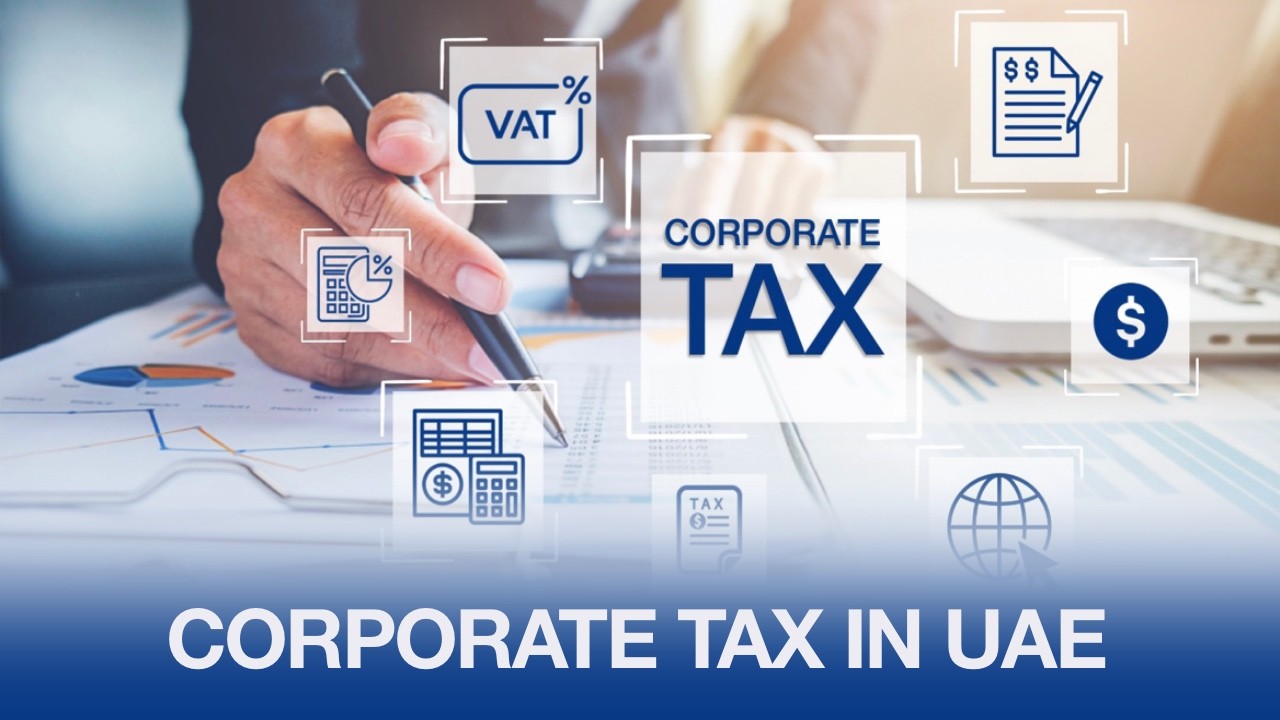
How to Check if a Business is Eligible for 0% Corporate Tax
Taxes are complex, particularly with new laws. The UAE implemented a 9% corporate tax policy on June 1, 2023, one of the lowest in the world. The UAE hopes this will attract more businesses.
This is interesting: some businesses may qualify for 0% corporate tax. You read correctly—0%! There are numerous misconceptions, particularly among free zone businesses who assume they automatically qualify for this exemption.
Knowing whether your business qualifies for 0% corporate tax is vital. It saves money and assures UAE tax compliance. We’ll discuss how to assess whether your business qualifies and clarify a few misconceptions.
Understanding the UAE Corporate Tax Regime

UAE corporate tax rose to 9% on June 1, 2023. This one of the lowest corporate tax rates in the world makes the UAE more appealing for company growth.
But why such a low tax rate? Simple: attract foreign and local firms to the UAE to enhance investment and economic development. A lower tax rate lets businesses retain more money to reinvest.
However, several typical 0% corporate tax eligibility misconceptions must be addressed. Corporate tax exemption is a common misconception among free zone businesses. That is not totally true. Free zones provide several advantages, including tax incentives. However, not all enterprises qualify for the 0% tax rate.
Businesses must follow certain standards and do certain actions to qualify for the 0% corporate tax. Tax exemption isn’t guaranteed by free zone status. It’s crucial to understand and satisfy FTA requirements.
Business guidance and assistance are vital from the FTA. They provide updates, seminars, and tools to assist businesses comply with tax regulations. Businesses must keep informed and follow FTA guidelines to satisfy tax exemption criteria.
Understanding these components of the UAE’s corporate tax structure helps firms manage tax compliance and take advantage of the 0% corporate tax rate if qualified.
Misconceptions About 0% Corporate Tax

Corporate tax exemption is a common misconception among free zone enterprises. They believe they qualify for 0% tax since they live in a free zone. If not understood, this assumption is false and might cause issues.
Kress Cooper CEO Mahar Afzal raised this issue at Khaleej Times’ “Corporate Tax UAE Decoded” conference. He stated that free zones do not exempt businesses from corporate tax. The truth is more confusing. Afzal highlighted that businesses must assess their position and activity to qualify for the 0% corporate tax rate.
Criteria for 0% Corporate Tax Eligibility
Businesses in the UAE must fulfill Federal Tax Authority (FTA) requirements to get 0% corporate tax. This can be achieved by demonstrating that they are a Qualifying Free Zone Person (QFZP). There are specific laws which restrict tax exemptions to businesses doing specified activities. Businesses must understand these factors to appropriately assess eligibility for qualifying activities:

1: Substance Requirements in a Free Zone
The business must be registered in a free zone. Substance criteria include having a physical office in the free zone, employing enough people to run the business, and making critical management decisions in the UAE.
UAE free zones provide 100% foreign ownership and tax advantages to encourage international business.
A business located in a free zone does not immediately qualify for 0% corporate tax. Businesses must be in an FTA-recognized free zone and meet other requirements relating to their activity and presence in the UAE.
Further, the FTA may need office leases, employment contracts, and management activity documentation. Meeting these criteria shows that the business has a substantial presence in the free zone.
2: Qualifying Activities
Next, the business must do FTA-defined qualifying activities. To boost manufacturing, professional services, logistics, and R&D, these activities are chosen.
UAE enterprises that produce products, warehouse, distribute, transport, or innovate may qualify. Businesses must carefully analyze the FTA’s qualifying operations. Even in a free zone, non-qualifying activity might disqualify a business from 0% tax.
3: Comply with Arm’s Length Principle & Transfer Pricing
Free Zone Persons must adhere to the arm’s length principle in transactions with related parties, maintaining appropriate documentation that details pricing methods and transactions to demonstrate compliance and ensure transparency in tax reporting. Businesses must comply with the UAE’s transfer pricing regulations as specified in Articles 34 and 55 of the Federal Decree Law No. 47 of 2022, which ensure that transactions between related entities are conducted at arm’s length or fair market value to prevent tax evasion or manipulation.
4: Meets any other conditions as may be prescribed by the Minister
In addition to Article 18, to be recognized as a QFZP, businesses must meet the other relevant conditions outlined in various Ministerial and Cabinet decisions that provide further guidelines and conditions for maintaining QFZP status, especially those relating to De Minimis Requirements and Qualifying Income.
5: Compliance with Regulations
Finally, the business must follow FTA rules. The 0% corporate tax rate is maintained by complying with tax laws. Maintain thorough and accurate financial records, file all tax returns and records on schedule, and follow any extra FTA standards and laws.
Late filings may result in fines and loss of tax benefits, so accurate record-keeping is essential. Businesses may get assistance from the FTA to understand and satisfy these criteria. Businesses may keep aware and compliant by attending FTA seminars and reading their publications.
Federal Tax Authority: Guidelines and Support
The FTA is vital to helping businesses understand and comply with corporate tax laws. To explain tax exemptions and qualifying activities, the FTA periodically releases thorough guidelines and revisions. Businesses need these criteria to be current and compliant.

In addition to rules, the FTA offers business assistance services. Businesses may learn about tax rules, compliance, and best practices at seminars, workshops, and conferences. Businesses may also get tax advice from the FTA online and via customer service.
Businesses can navigate the UAE’s complicated corporate tax system and confidently apply for the 0% corporation tax rate with FTA advice and instructions.
The Role of Technology in Tax Compliance

Technology is vital to current tax compliance. It helps businesses handle tax responsibilities efficiently and properly, eliminating mistakes and fines. Technology helps organizations comply with increasingly complicated tax requirements.
Technology is crucial to tax compliance, says Dubai Investments Group Tax Manager Harsh Doshi. Many businesses are embracing innovative tax technologies, he says. These solutions simplify tax procedures, assure correct reporting, and speed up tax authority contact.
Businesses should use multiple ways to incorporate tax technology. Maintaining a tax compliance dashboard is advised. A dashboard centralizes tax-related processes and deadlines, enabling businesses to track their tax status in real-time. It also sets deadline notifications to minimize late files and fines and visualizes tax data in graphs and charts for improved analysis and decision-making.
Another important method is proper data management. Businesses should regularly analyze their tax data and combine data from several sources to preserve consistency. Tax data must be stored securely to prevent breaches. Following these guidelines and using technology can help businesses improve tax compliance, reduce risks, and comply with new requirements.
Practical Steps for Businesses to Determine Eligibility
1. Understand the Criteria and Registering with the Federal Tax Authority
Familiarize yourself with the criteria outlined in the Regulations for achieving QFZP status. Register your business with the UAE’s Federal Tax Authority (FTA) as required, providing specific information about your company and finances. This is a must for all businesses, regardless of tax status. Registering requires specific information about your company, finances, and other matters.
2. File Returns Even If Exempted
You must submit taxes even if your business qualifies for 0% corporate tax. Filing returns keeps your firm compliant with local laws and transparent with tax authorities. Maintaining correct records and submitting all relevant papers on time is crucial. Maintain accurate records of all sales, purchases, imports, exports, VAT invoices, and receipts to ensure accurate VAT return filing and demonstrate compliance with QFZP requirements.
3. Conduct a Self-Assessment of Activities
Self-assess your business operations to see whether they qualify for 0% tax. Review FTA standards to determine qualified activity. This self-assessment helps you determine whether your business needs to make changes to qualify for tax exemption and be compliant as per the requirements of Corporate Tax Laws, Cabinet Decision No. 100 of 2022 and Ministerial Decision No. 265 of 2023.
4. Seeking Private Clarification from FTA
Businesses can seek a private clarification from the Federal Tax Authority (FTA) to ensure compliance with the QFZP criteria. Under Article 59 of the Corporate Tax Law, businesses can request a private clarification from the FTA on their specific circumstances to avoid future disputes and ensure adherence to the tax laws.
5. Consult with Tax Professionals
Engage with tax advisors and consultants who have a proven track record and industry experience. Their expert knowledge can provide personalized assistance tailored to your company’s specific requirements and help you stay updated with any changes in tax laws and Free Zone regulations.
Role of Tax Advisors and Consultants
Expert tax guidance and consulting may help your business. Look for tax advisory services with a good track record, industry experience, and customer testimonials.

Consulting tax professionals has several benefits:
- Expert Knowledge: Advisors are tax law experts and can personalize assistance to your company’s requirements.
- Impact Assessment: Tax consultants can perform detailed impact assessments to understand how various tax laws and changes will affect your business operations and financial health.
- Compliance Assurance: They assist your business to register, comply with tax laws and save you from penalties and fines.
- Strategic Planning: Strategic tax preparation by experts optimizes your company structure for tax rewards.
- Ongoing Support: Support and information on tax law changes that may affect your company.
Businesses can check their eligibility for the 0% corporate tax rate and comply with UAE tax laws by following these steps and seeking expert guidance.
Staying Updated with UAE Tax Laws
Businesses must monitor tax law changes to avoid fines. Understanding tax laws helps businesses adapt to regular changes. Businesses can also take advantage of new benefits by staying up to date on tax rules.
UAE’s Federal Tax Authority (FTA) holds seminars and conferences to update businesses on tax rules. These events are great for learning from experts, asking questions, and networking with other businesses experiencing similar difficulties. Attending seminars keeps your firm up to date on changes and regulatory standards.
Many online resources help businesses remain updated on tax laws. The FTA’s website contains rules, updates, and FAQs. Subscribers to tax newsletters and publications may also get updates and professional advice.
Businesses may keep educated and proactive in tax compliance by using the help of experts, ensuring they are ready for regulatory changes.
Conclusion
Every business registered in a free zone does not automatically qualify for 0% corporate tax. To qualify for the UAE’s 0% corporate tax, businesses must demonstrate that they are a Qualifying Free Zone Person (QFZP). This requires adherence to the conditions outlined in the Corporate Tax Law, Cabinet Decision No. 100 of 2022, and Ministerial Decision No. 265 of 2023.
This approach requires being up to date on tax law changes and getting professional counsel. Businesses should regularly evaluate their status and activities to qualify for QFZP.
Avoiding fines and maximizing benefits requires tax compliance and precise appraisal. Businesses can master tax laws by remaining updated and receiving qualified advice.
Read More Blogs:
UAE Corporate Tax Guide for Logistics Companies
The United Arab Emirates (UAE) stands as a beacon of economic prowess and strategic significance in the Middle East, with its logistics ecosystem playing a pivotal role in supporting this status. Renowned for its global connectivity, state-of-the-art infrastructure, and business-friendly environment, the UAE has emerged as a logistics hub that facilitates seamless movement of goods across the region and beyond. Is your Logistics Company prepared for the UAE Corporate Tax? You can download the Corporate Tax Guide for Logistics Companies by clicking the download link in this article.
Introduction to the Logistics Industry in UAE
At the heart of this logistics eco-system is the strategic geographical location of the UAE, positioned at the crossroads of Europe, Asia, and Africa. This unique placement has transformed the country into a global trade gateway, with its ports, airports, and road networks serving as vital conduits for the efficient transportation of goods.
The maritime sector plays a crucial role in the UAE’s logistics infrastructure, with world-class ports such as Jebel Ali in Dubai and Khalifa Port in Abu Dhabi. These ports not only handle substantial cargo volumes but also boast cutting-edge facilities, embracing technology to streamline operations and enhance efficiency. Complemented by extensive road networks and an ever-expanding aviation sector, the UAE’s logistics ecosystem seamlessly integrates various modes of transportation.
Furthermore, the UAE has actively invested in advanced technologies such as blockchain, artificial intelligence, and Internet of Things (IoT) to optimize supply chain processes. These innovations enhance transparency, reduce costs, and improve overall logistics management, contributing to the country’s reputation as a forward-thinking logistics hub.
In addition to its infrastructural strengths, the UAE’s logistics ecosystem benefits from a business-friendly environment and government initiatives that encourage foreign investment. Free zones, such as the Jebel Ali Free Zone and the Dubai Airport Free Zone, provide favourable conditions for companies to establish their logistics operations, fostering a thriving ecosystem of logistics service providers, manufacturers, and traders.
Logistics ecosystem in the UAE
Logistics is the management of the flow of goods between the point of origin and the point of consumption to meet customer requirements. The logistics company plans, implements, and controls the movement and storage of goods, services, or information within a supply chain. The process strives to find the best solution for manufacturing and distributing goods by considering how the market uses the products.
The logistics ecosystem in the UAE encompasses a diverse range of businesses, each playing a specific role in the efficient movement of goods and services.
Highlights from the UAE Corporate Tax Guide for Logistics Industry
The UAE’s new federal corporate tax (CT) introduced in June 2023 applies to most businesses operating in the country, including those in the logistics industry. While the CT framework is generally applicable, certain aspects require nuanced understanding for logistics companies. Here’s a breakdown of key elements of the CT law relevant to the logistics industry:
General Taxable Income:
- All profit earned by logistics companies within the UAE from activities like freight forwarding, warehousing, distribution, etc., will be subject to the 9% standard CT rate.
Exempt Income:
- Some specific logistics activities enjoy exemption from CT. These include:
- International transportation of goods by sea or air (e.g., revenue earned by shipping lines and airlines from international cargo movement).
- Supply of certain goods in transit (e.g., fuel supplied to ships or aircraft for international journeys).
Deductible Expenses:
- Logistics companies can deduct legitimate business expenses incurred to generate taxable income. This includes expenses like transportation costs, warehousing fees, employee salaries, and marketing expenses.
- However, expenses related to exempt income cannot be deducted for CT purposes.
Transfer Pricing:
- For logistics companies with international transactions, transfer pricing regulations apply to ensure arm’s length pricing for transactions between related entities.
Free Zone Considerations:
- Logistics companies operating within designated free zones may benefit from special CT treatment depending on the free zone regulations. Some free zones offer temporary CT exemptions or lower tax rates.
Is your Logistics Company prepared for the UAE Corporate Tax?
In the dynamic world of logistics, staying ahead is not just a choice; it’s a necessity. The UAE’s logistics sector, a crucial cog in the global trade machinery, is witnessing a transformative era with the introduction of Corporate Tax. Every registered business in the UAE must now navigate these new waters and ensure compliance.
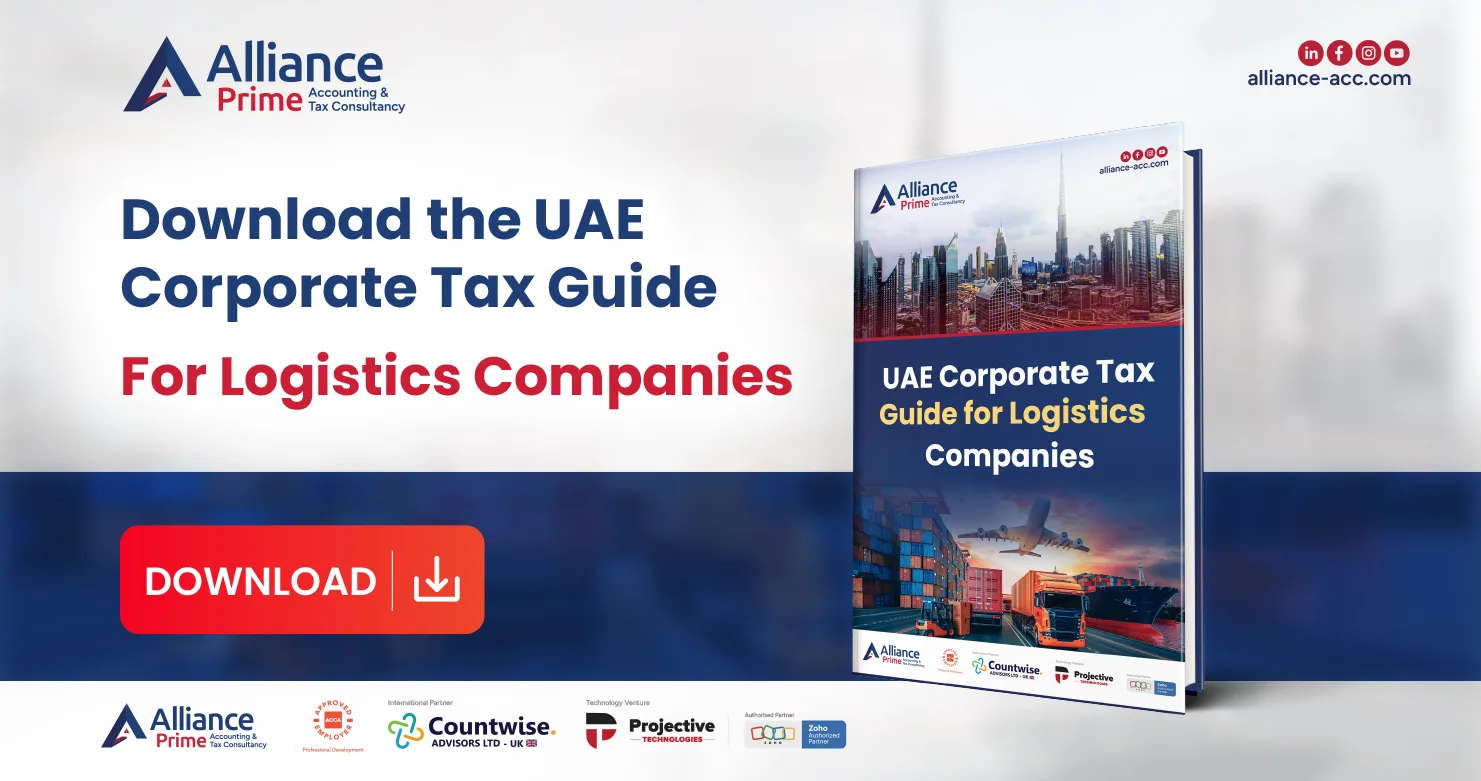
Download our UAE Corporate Tax Guide for Logistics Companies now! Ensure your business is tax-ready and avoid penalties. Click below to access the FREE guide and equip your logistics company for success in the era of Corporate Tax. 👇
Navigate the New Era of Corporate Tax in the UAE with Confidence. Our guide provides essential insights to help your logistics company not just survive but thrive in this evolving landscape.
Stay informed, stay resilient.
Conclusion
A robust compliance system and the use of tax automation would enable large logistics companies to comply with specific corporate tax requirements regarding the information requested by the FTA during Tax Audit. Often, due to voluminous transactions, the authenticity of the tax data gets compromised and is not properly reviewed. An urgent matter is to allocate adequate budgets to the implementation of a robust IT infrastructure to support Corporate Tax Compliance. It is imperative that Management not only ensures that the correct VAT treatment is applied on their supplies, but also that this treatment is reflected in the Corporate Tax returns.
While there are certain transactions whereby the position may differ amongst industry players (due to lack of clarity, etc.) and in such a scenario, it is advisable to seek clarification from FTA at the earliest possible time. If the response from FTA is different, i.e., taxable or exempt, in comparison to the tax position taken by the company for past transactions, this change would impact previous tax returns and payments, and would lead to penal consequences.
UAE Corporate Tax Registration Mandatory for Medium and Small Enterprises, Even with Losses
As the UAE embarks on its first full-year corporate tax period, a crucial revelation demands the immediate attention of medium and small business owners. Contrary to some misconceptions, the latest news mandates the corporate tax registration, a requirement applicable to both profit-making and loss-incurred enterprises.
Corporate Tax in UAE is a direct tax imposed on the net income or profit of corporations and businesses introduced by the UAE Ministry of Finance. This tax reform is designed to support medium and small enterprises by instituting an initial statutory tax rate of 9% on corporate profits exceeding AED 375,000. It is obligatory to comply with the corporate tax regulations for all eligible Taxable Persons in the UAE. This involves corporate tax registration, filing annual tax returns, and maintaining accurate accounting records.
Moreover, the introduction of corporate tax in UAE is to meet the international tax standards.
Corporate Tax Registration: A Non-Negotiable Step in 2024
The Federal Tax Authority has left no room for ambiguity – all businesses operating in the UAE are obligated to register for corporate tax in 2024. This directive extends to enterprises, irrespective of their profitability or the duration of their establishment. Even businesses incurring losses are not exempt from this mandatory registration.
Despite lingering doubts among some SME owners about the urgency of corporate tax registration, experts emphasize its immediate necessity. Waiting until profits approach the Dh375,000 profit mark is a misconception that could lead to non-compliance.
Small Business Relief: A Lifeline for Eligible Entities
To address concerns, the authorities have introduced the ‘Small Business Relief’ option. Eligible taxable persons, especially those with revenues below or equal to Dh3 million, can elect for this relief on their tax return. However, even if a business qualifies for relief, the fundamental requirement remains unchanged – registration for corporate tax is mandatory.
Key Points about Small Business Relief
- Eligibility is determined by business revenue below or equal to Dh3 million for the latest and all previous tax periods.
- Once revenue exceeds Dh3 million, the business is ineligible for the relief package, even if subsequent revenues fall below the threshold.
- Despite relief, businesses must register for corporate tax, emphasizing the mandatory nature of registration for all.
Essential Considerations for Corporate Tax Compliance
As the registration process opened in June last year, businesses following the calendar year as their financial year will be paying their 2024 corporate tax by September 2025. It’s crucial for businesses to prove eligibility by submitting tax returns and maintaining necessary records.
The application of UAE Corporate Tax extends to all businesses “incorporated, effectively managed and controlled” in the UAE. Regardless of profit or revenue, registration is a non-negotiable step.
Comparing VAT and Corporate Tax
Drawing a comparison with VAT requirements, the threshold for corporate tax registration is mandatory, aligning with the ethos of a proactive approach. Even new businesses setting up in the UAE are advised to register for corporate tax immediately.
In conclusion, navigating the corporate tax landscape is essential for businesses in the UAE. The Alliance Prime team recommends the use of accounting software as part of best practices.
Stay informed, stay compliant. Act now to register for corporate tax and ensure the smooth operation of your business in accordance with the latest regulations.
Why is Alliance Prime the best Tax Consultancy in Dubai?
Alliance Prime is a leading provider of auditing, accounting, taxation, and advisory services in the UAE. Our expert team will guide you through the complex laws and regulations of UAE, including Corporate Tax, VAT, Excise Tax, Accounting and Bookkeeping, ESR, Financial Advisory, ERP, etc. We stay up-to-date with the latest changes in laws and regulations in the UAE. If you’re looking for reliable and professional auditing, accounting, taxation, and advisory services in the UAE, look no further than Alliance Prime.
Contact Alliance Prime on +971 58 825 7795 or Email us at:- contact@alliance-acc.com for expert assistance in Corporate Tax Registration.
Who is exempt from UAE corporate tax?

A person who is exempt under the UAE Corporate Tax Law is not liable to pay Corporate Tax. This can be because of automatic exemption or by exemption through an application by the Taxable Person. Further, the provision details who can automatically be considered as Exempt Persons. Also, who can apply for securing an exemption under the UAE Corporate Tax Law.
What is UAE Corporate Tax?
Corporate Tax is a direct tax applied to a corporation’s or other entity’s net income or profit from its operations. In some countries, corporate Tax is known as “Corporate Income Tax ” or “Business Tax.”
A new federal corporate tax system will be implemented in the United Arab Emirates (UAE) with effect from fiscal years commencing on or after 1 June 2023, according to a 31 January 2022 announcement by the MoF of the UAE. Except for Bahrain, the UAE has the minimum corporate income tax rate in the GCC region at 9%.
What is the Corporate Tax Exemption in UAE ?
Individuals whose economic activity needs a license or license from the government will be required to pay corporate tax on their revenue derived from sources within the UAE corporate tax. The legal entities with UAE incorporation or whose management and control are based there would be liable to Corporate Tax on their international revenue. If companies that are formed outside of the UAE maintain permanent establishments there or receive any revenue from a UAE source, the income would be subject to Corporate Tax.
In light of this, companies registered in the UAE are urged to evaluate their tax requirements and make plans in advance. Businesses would find it helpful to engage with tax consultants in Dubai to guarantee corporate tax compliance. Businesses can seek the assistance of tax advisors to assess whether they are subject to UAE Corporate Tax or not. The types of businesses that would be liable for the corporate tax regime are described in a document that the UAE government has issued for comment. The paper also includes a list of organizations that are free from UAE corporate tax.
Automatic Exemption from UAE Corporate Tax Law
Certain Persons under the UAE Corporate Tax Law maybe automatically exempt from Corporate Tax. Also, this means that the law specifically provides that certain categories of persons are exempt. For example, a Government Entity and Government Controlled Entity are Exempt Persons by automatic application of law.
Exemption claimed through application
A Taxable Person can apply, under the relevant provisions, to claim exempt status under the UAE Corporate Tax Law. Such entities can apply for exemption from Corporate Tax. On examination of the application, the Federal Tax Authority can exempt them from Corporate Tax, after fulfilment of certain conditions.
Who is Exempted From Corporate Tax?
Those mentioned above are the main guidelines for applying corporate tax. However, there are several exceptions, and the following consists of a list of individuals exempted from UAE Corporate Tax:
- Government and Government-controlled Companies
The government and companies controlled by the government that engage in activities that are not commercial in nature and are for the social well-being of the general public are free from Corporate Tax. Revenue of the government and/or its owned corporations would be entitled to Corporate Tax if they were engaging in business operations for commercial ends while operating under a trade license.
- Corporation Engaged in the Extraction of Natural Resources
Under the UAE constitution, an Emirate where the natural resource is located is considered to be the owner of that resource. Companies that extract natural resources must agree with that Emirate and pay taxes at the state level. Since the Corporate Tax is a federal tax, it would not be applied to the revenue made by companies extracting and exploiting natural resources that are subject to Emirate-level taxation.
- NGOs (non-profits) and PBOs (public benefit organizations)
Charities and public benefit groups collaborate with the government to advance significant societal welfare and neighborhood or group interests. If these organizations engage in such activities, they will submit a request for an exemption from Corporate Tax to the Ministry of Finance. If the application is accepted, the organization will be noted in a Cabinet Decision, and its revenue will not be subject to Corporate Tax. When such organizations engage in commercial endeavors for the benefit of those affiliated with the organizations, Corporate Tax will apply to those organizations’ revenue.
- Investment Funds
Investment funds are typically set up as limited partnerships rather than corporate companies to maintain tax neutrality for their investors. The Corporate Tax system aims to regard UAE and international investment funds that are set up as unincorporated partnerships as financially transparent, which would place investors in a comparable tax position to if they had invested directly in the fund’s underlying assets.
They are eligible to seek exemption from the corporate tax system through the Federal Tax Authority (FTA). The FTA will authorize tax exemption for investment funds that satisfy their conditions. You can get assistance from Dubai tax advisors to seek a company tax exemption.
- Government-run or Regulated Private Social Security and Retirement Pension Schemes
The Corporate Tax does not apply to government-run or regulated private social security and retirement pension schemes. If applicable, people must analyze their position based on the abovementioned criteria and proceed appropriately to have proper corporation tax implementation.
Will Holding Corporations in the UAE be Excluded From the Corporate Tax?
Holding corporations will be covered by the MoF corporate tax in most cases. Specific holding company revenue streams, on the other hand, may be excluded. Corporate Tax will likely be exempt from dividends and capital gains earned from certain qualified stockholdings. What constitutes a qualified stake is still uncertain. A minimum amount of shareholding (possibly at least 10% following Pillar Two requirements) and a minimum holding duration are expected to be required to meet a qualifying shareholding.
How May Alliance Prime Assist You?
As a renowned corporate tax advisor in Dubai, we have a team of professionals with vast experience in tax law advising, arbitration, compliance, and litigation. Residents and immigrants in Dubai may rely on our tax consultant in Dubai for sound counsel and up-to-date knowledge of UAE Corporate Tax. Our corporate tax consultant in Dubai, on the other hand, caters to the needs of firms operating in the UAE – whether domestically or internationally. For experienced tax advice services from seasoned tax experts in Dubai, UAE, contact us right now.
Why is Alliance Prime the best Tax Consultancy in Dubai?
Alliance Prime is a leading provider of auditing, accounting, taxation, and advisory services in the UAE. Our expert team will guide you through the complex laws and regulations of UAE, including Corporate Tax, VAT, Excise Tax, Accounting and Bookkeeping, ESR, Financial Advisory, ERP, etc. We stay up-to-date with the latest changes in laws and regulations in the UAE. If you’re looking for reliable and professional auditing, accounting, taxation, and advisory services in the UAE, look no further than Alliance Prime.
To Book a Free Consultation, contact us on: at- +971 58 825 7795 or Email us at:- contact@alliance-acc.com
Tax Consulting Services in UAE: Expert Advice for Your Business
Alliance Prime, a leading consultancy in the UAE, specializes in providing comprehensive tax consulting services for businesses of all sizes. With a highly skilled and experienced team, we are committed to offering expert advice and solutions tailored to meet your specific tax needs. From corporate tax consulting services to value-added tax (VAT) advisory and excise tax consulting services, we cover a wide range of areas to ensure that your business complies with the latest tax regulations and maximizes its financial potential. Let us guide you through the intricacies of tax management and help you navigate the complex world of taxation seamlessly.
Significance of Tax Consulting Services in the UAE
Tax consultants in Dubai play a critical role in supporting businesses for various reasons:
- Expertise and Knowledge: Tax consultants in the UAE possess comprehensive knowledge of tax regulations, including VAT and Corporate Tax. They stay updated with the latest changes in VAT rules, ensuring businesses remain compliant. With a deep understanding of the intricacies of tax laws, these consultants can provide valuable advice to minimize tax liabilities and maximize tax recoveries for businesses.
- Adherence to Compliance: Adhering to tax compliance is imperative for businesses in Dubai, as non-compliance can lead to substantial penalties. Tax consultants in Dubai assist companies in maintaining compliance with tax regulations, thereby avoiding potential fines or penalties.
- Time Efficiency: VAT compliance can be a time-consuming process, particularly for businesses unfamiliar with tax regulations. Outsourcing VAT compliance to a tax consultant enables businesses to concentrate on their core operations, saving valuable time and resources.
- Cost-Effectiveness: Tax consultants in the UAE aid businesses in identifying opportunities to optimize their VAT positions, ultimately reducing tax liabilities and maximizing tax recoveries. This can lead to significant cost savings for businesses in the long term.
- Peace of Mind: t
Value Added Tax (VAT) Services in the UAE
The introduction of the Value Added Tax (VAT) law in the UAE has significantly impacted businesses across various sectors. At Alliance Prime, we understand the importance of complying with VAT regulations and offer specialized services to help you navigate this complex landscape. Our VAT services include comprehensive guidance on understanding the implications of VAT on your business, planning for VAT implementation, and ensuring legal compliance with filing and registration requirements. With our detailed understanding of the technical aspects of VAT, we can assist you in adapting your business systems and processes to adhere to the new VAT regulations effectively.
Excise Tax Consulting Services
Our excise tax consultation services are tailored to assist businesses in understanding and complying with excise tax regulations in the UAE. With our in-depth knowledge of excise tax requirements, we provide expert guidance on excise tax implications for your business, helping you to ensure proper compliance and minimize any potential tax-related risks. We work closely with businesses to streamline their excise tax management processes, enabling them to make informed decisions and operate within the legal framework set by the UAE government.
Corporate Tax Services in UAE?
In the UAE, businesses are required to comply with tax laws and regulations set by the government. Corporate tax will be levied at 0% for taxable income up to AED 375,000 and 9% for taxable income over AED 375,000. Large multinational corporations that fulfill particular requirements related to ‘Pillar Two’ of the OECD Base Erosion and Profit Shifting initiative will be taxed at a different rate. Corporate tax services help companies to navigate this new complex tax system and ensure compliance with tax regulations.
Country by Country Reporting and Economic Substance Regulations
Our consultancy services extend to assisting businesses in understanding the intricacies of country-by-country reporting and economic substance regulations in the UAE. We provide guidance on the applicability and compliance of these regulations, ensuring that your business meets the necessary requirements set forth by the authorities. By offering comprehensive insights and actionable strategies, we help businesses navigate these complex reporting requirements effectively.
Importance of Tax Consulting Services
Tax consulting services play a crucial role in ensuring that businesses in the UAE adhere to the country’s taxation laws and regulations. With the support of experienced tax consultants, businesses can mitigate potential risks, optimize their tax positions, and ensure compliance with the latest tax requirements. From offering strategic tax planning to providing guidance on tax computation and compliance, tax consultants are instrumental in helping businesses manage their tax-related obligations efficiently.
Benefits of Tax Consulting Services
Engaging the services of a tax consultant brings numerous benefits for businesses operating in the UAE. From providing essential information and advice on tax matters to assisting with tax return filing and audits, tax consultants play a pivotal role in streamlining business operations and ensuring regulatory compliance. By staying updated with the latest changes in taxation policies, tax consultants help businesses make informed decisions and implement effective tax management strategies. Their expertise in handling complex tax issues and providing tailored solutions enables businesses to minimize tax liabilities and avoid potential penalties, ensuring peace of mind and financial stability.
International Tax Services in the UAE
Navigating the complexities of international tax laws can be challenging for businesses expanding their operations globally. Our specialized international tax services focus on providing comprehensive assistance in structuring cross-border transitions, tax planning, and understanding double taxation treaties. We work closely with the Ministry of Finance to ensure that you gain the necessary certificates, such as value-added tax certificates and tax residency certificates, essential for conducting international business in the UAE. Our team has a deep understanding of international tax implications and can guide you through the process to ensure that your business remains compliant and tax-efficient.
Why Choose Alliance Prime for Your Tax Consulting Services?
Alliance Prime stands out as one of the premier choices for businesses seeking reliable and professional tax consulting services in the UAE. With a team of qualified financial professionals and tax experts, we are committed to providing comprehensive solutions that address your specific business requirements. Our tailored approach to tax consulting ensures that we understand your business intricacies and offer customized strategies to optimize your tax positions and ensure compliance with the latest regulations. By leveraging our expertise and industry knowledge, you can navigate the complexities of the UAE’s tax landscape seamlessly and focus on achieving your business objectives. Contact us today to learn more about our services and how we can support your business’s need for tax consulting services.