Tag: Corporate Tax Planning
UAE VAT Update 2026: New Foreign Currency Conversion Requirements Businesses Need to Know
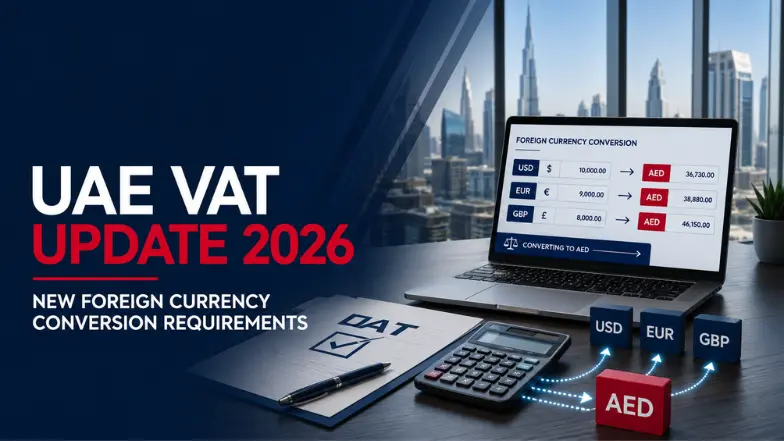
The UAE VAT landscape continues to evolve, making it increasingly important for businesses to maintain accurate tax calculations and reliable financial records.
One area requiring particular attention in 2026 is the treatment of transactions conducted in foreign currencies. The Federal Tax Authority (FTA) has provided updated guidance concerning the conversion of foreign currency amounts into UAE dirhams for VAT purposes.
For UAE businesses dealing with international customers, overseas suppliers, or transactions denominated in currencies other than AED, understanding these requirements is essential for accurate VAT reporting and compliance.
Why Foreign Currency Conversion Matters for UAE VAT
Businesses operating in the UAE frequently issue or receive invoices in currencies such as US dollars, euros, British pounds, and other foreign currencies.
However, for UAE VAT purposes, relevant amounts must be expressed in UAE dirhams (AED).
The exchange rate used can therefore directly affect the AED value recorded for a transaction and, consequently, the VAT amount reported.
Even relatively small inconsistencies in exchange-rate calculations can become significant when a business processes a large number of foreign currency transactions.
For finance and accounting teams, the issue is not simply choosing an exchange rate. Businesses also need a consistent and properly documented approach that can be supported by their accounting records.
What Has Changed in 2026?
The 2026 update provides businesses with a clearer framework for determining the appropriate AED equivalent when dealing with foreign currency transactions for VAT purposes.
A key aspect is the use of approved exchange-rate platforms when determining the applicable conversion rate.
Where the relevant requirements apply, businesses should use the prescribed approach to determine the AED value at the appropriate time and date of the transaction.
This is particularly important for companies with regular cross-border transactions or accounting systems that automatically convert foreign currency amounts.
Consistency Is Important
One of the important compliance considerations under the updated approach is consistency.
Once a business adopts the relevant approved platforms for determining its foreign currency exchange rates, the same selected platforms should be used consistently throughout the applicable calendar year.
This means finance teams should avoid changing exchange-rate sources simply because another platform provides a more favourable rate for a particular transaction.
A documented and consistent methodology can help businesses maintain reliable VAT calculations and provide a clearer audit trail.
How Should the Exchange Rate Be Determined?
For transactions requiring foreign currency conversion, businesses should determine the appropriate exchange rate based on the applicable requirements at the relevant date and time of the supply or receipt.
Where the methodology requires rates from the approved platforms, the relevant rates should be obtained and the required average calculated to establish the AED equivalent.
Businesses should ensure that the process used in practice matches the methodology configured within their accounting or ERP system.
This is particularly important for companies processing high volumes of transactions automatically.
Which Businesses Should Pay Attention?
The update can be particularly relevant for UAE businesses that regularly deal with:
- International customers and suppliers
- Foreign currency tax invoices
- Cross-border services
- Imports and exports
- Overseas professional service providers
- International e-commerce transactions
- Multi-currency accounting systems
Businesses with only occasional foreign currency transactions should also ensure that the correct methodology is followed whenever such transactions occur.
Impact on Accounting and Bookkeeping
This VAT update is not only a tax department matter. It also has practical implications for accounting and bookkeeping processes.
Accounting teams may need to review how exchange rates are captured in their systems, how foreign currency invoices are converted, and whether supporting evidence for the rates used is being maintained.
Businesses should consider reviewing:
Accounting software settings: Confirm that exchange-rate configurations align with the VAT requirements.
Tax invoice processing: Ensure foreign currency invoices are converted appropriately for VAT reporting.
Record keeping: Maintain sufficient documentation supporting the exchange rates and methodology applied.
Internal procedures: Establish a consistent process that accounting and VAT teams can follow.
System automation: Check whether ERP or accounting software automatically retrieves rates from sources that align with the business’s selected methodology.
A mismatch between the company’s VAT procedure and its accounting system could potentially result in inconsistent reporting.
Why Record Keeping Is Essential
Accurate documentation is an important part of VAT compliance.
Businesses should be able to demonstrate how the AED value of a foreign currency transaction was determined. This may include maintaining appropriate evidence of the exchange rates used and ensuring that transaction records can be reconciled with VAT returns and accounting records.
Strong record-keeping procedures also make it easier to respond if transaction calculations are reviewed as part of a tax audit or compliance check.
What Should UAE Businesses Do Now?
Businesses dealing with foreign currency transactions should use this update as an opportunity to review their existing VAT and accounting procedures.
Finance teams should identify the exchange-rate sources currently being used, confirm whether their methodology meets the applicable requirements, and check whether the same approach is being followed consistently.
Companies should also review their accounting software and ERP configurations rather than assuming that automatically generated exchange rates are suitable for UAE VAT purposes.
Where there is uncertainty, obtaining professional VAT advice can help identify potential gaps before they affect future VAT returns.
Need assistance reviewing your UAE VAT compliance?
Talk to our tax experts at Alliance Prime.
Disclaimer: This article is for general informational purposes only and does not constitute tax, legal, or professional advice. UAE tax regulations and guidance may be updated or amended from time to time. Businesses should assess the requirements based on their specific circumstances and seek professional advice where necessary
Corporate Tax Planning Strategies for Dubai Businesses

Corporate tax in the UAE has changed how companies handle their finances. Businesses in Dubai focus on profit growth and also on following tax laws closely. Every company needs a clear corporate tax strategy in Dubai. This ensures stability, transparency, and lasting success.
At Alliance Prime Accounting & Tax Consultancy, we are an approved FTA tax agent. We help businesses plan their taxes effectively. This way, they can stay ahead of regulatory changes. With expert help and solid financial planning, companies can save on taxes in the UAE. This also helps them build a sustainable future.
Why Corporate Tax Planning Matters
Corporate tax planning helps businesses save money, manage profits, and follow FTA rules. Many companies put off tax planning until year-end. This can cause missed deductions or penalties. A strong corporate tax strategy in Dubai improves this. It relies on smart financial management throughout the year.
When businesses grasp their tax duties early, they can:
- Organize documents
- Spot eligible deductions
- Shape operations for tax efficiency in the UAE.
This boosts compliance and cash flow. Companies gain more room to invest and grow.
Key Principles of a Corporate Tax Strategy Dubai
An effective tax strategy requires organization, clarity, and consistent review. Below are key principles that help businesses manage corporate tax efficiently in Dubai.
1. Keep Transparent Financial Records
Every business should maintain clear and detailed records of income and expenses. Well-organized data helps during audits and simplifies the calculation of taxable income. It also builds the foundation of a reliable corporate tax strategy Dubai.
2. Identify Allowable Deductions
Businesses can lower their taxes by claiming valid deductions. These include rent, employee salaries, utilities, and marketing costs. Tracking these costs correctly enhances tax efficiency UAE and prevents errors during filing.
3. Review Your Business Structure
Some company setups offer better tax benefits than others. Reviewing your legal structure can help you save on taxes and stay compliant. For example, some free-zone entities have special conditions that can affect taxation.
4. Build a Compliance Calendar
Missing deadlines can lead to penalties. Setting reminders for filing dates and review sessions keeps your team consistent. Timely filing also improves your company’s professional reputation with the FTA.
5. Seek Expert Guidance
Working with qualified professionals saves time and minimizes risk. Alliance Prime Accounting & Tax Consultancy is an approved tax agent by the FTA. We provide clear advice and craft a custom corporate tax strategy in Dubai. It fits your business model perfectly.
How to Improve Tax Efficiency UAE
To achieve tax efficiency in the UAE, manage your business to lower liability legally. The process involves three important steps:
1. Smart Investment Decisions
Businesses should analyze which investments qualify for deductions or tax benefits. Putting money into capital for a business can cut taxable income and enhance financial results.
2. Monitor Business Expenses
Consistent tracking of expenses throughout the year ensures that no deduction is missed. Digital tools and accounting systems make this easier by keeping accurate financial records.
3. Regular Financial Reviews
Check in every quarter or twice a year. This way, you can spot tax-saving options before the fiscal year ends. It also ensures that your financial data remains organized and ready for filing.
These simple actions boost tax efficiency in the UAE. They also help your company grow responsibly.
Common Tax Planning Mistakes to Avoid
Even well-managed businesses can make errors that increase tax liability. Some common mistakes include:
- Mixing business and personal expenses
- Ignoring early tax planning
- Missing filing deadlines
- Misunderstanding deductions and exemptions
- Relying on incomplete financial data
Avoiding these mistakes boosts your corporate tax strategy in Dubai. It also helps keep your credibility with authorities. Businesses that plan regularly face fewer compliance challenges and enjoy smoother audits.
The Role of Professional Tax Consultants
Corporate tax laws continue to evolve, and staying updated is essential. Experts can help your business meet FTA standards. They also keep you tax-efficient in the UAE.
At Alliance Prime Accounting & Tax Consultancy, we are an approved tax agent by FTA. Our team provides expert advice on every aspect of the tax process. We help you:
- Register correctly with the FTA
- Prepare and file accurate tax returns
- Identify allowable deductions and exemptions
- Develop cost-effective financial plans
- Avoid penalties through proactive compliance
Our goal is to turn tax obligations into opportunities. A solid plan and expert help can keep your company stable and profitable in Dubai’s tough market.
Practical Steps for Better Corporate Tax Planning
To design an effective and sustainable tax plan, follow these practical steps:
- Start Early: Plan your taxes before the financial year ends. Early preparation gives more flexibility in decision-making.
- Use Technology: Adopt accounting software that tracks income and expenses automatically.
- Schedule Reviews: Evaluate your tax strategy every quarter for accuracy and improvement.
- Train Your Staff: Make sure your finance team knows the latest tax laws and filing rules.
- Consult Professionals: Talk to experts regularly. This keeps your corporate tax strategy in Dubai up-to-date with FTA guidelines.
Follow these steps regularly. Your company will become more compliant and improve tax efficiency UAE over time.
Why Choose Alliance Prime Accounting & Tax Consultancy
Alliance Prime Accounting & Tax Consultancy is an approved tax agent by the FTA. We help businesses in Dubai and the UAE handle their corporate tax duties with ease. Our services include:
- Corporate tax registration and filing
- Ongoing tax planning and strategy development
- Financial audits and documentation reviews
- Industry-specific compliance support
- Personalized consultation for long-term growth
Our experienced consultants understand the local market and legal framework. We create simple, effective solutions that match your business goals. We also ensure full compliance with FTA requirements.
Conclusion
Tax planning is key for every successful business in Dubai. Planning ahead, keeping good records, and having a strong strategy help companies stay compliant and save on taxes in the UAE. A solid corporate tax plan in Dubai reduces financial risks and boosts growth.
At Alliance Prime Accounting & Tax Consultancy, we’re an FTA-approved tax agent. We assist businesses in crafting structured plans that increase efficiency, accuracy, and profitability. From planning to filing, our team ensures every step supports your long-term goals.
To boost your finances and simplify compliance, reach out to Alliance Prime today. Let our experts create a custom tax plan. This will keep your business compliant and confident, preparing you for the future.