Month: November 2023
Online Accounting and Bookkeeping Services: Streamline Your Finances
In the dynamic business landscape of the United Arab Emirates (UAE), staying ahead requires not only strategic acumen but also meticulous adherence to financial regulations. The implementation of VAT has significantly altered the financial landscape, making accounting and bookkeeping pivotal for businesses of all sizes. This article, guided by insights from industry leaders such as Alliance Prime, aims to explore the benefits of online accounting and bookkeeping services in the UAE, helping businesses streamline their financial operations.
In the evolving business landscape of the United Arab Emirates (UAE), the implementation of VAT has significantly increased the importance of robust accounting and bookkeeping services. Whether you operate a multinational corporation, a small or medium-sized enterprise (SME), or a burgeoning startup, compliance with UAE tax regulations is imperative. This article explores the pivotal role of online accounting and bookkeeping services and how they can be a game-changer for businesses in the UAE.
In today’s fast-paced business environment, leveraging online accounting and bookkeeping services has become imperative for organizations aiming to streamline their finances efficiently. According to a recent survey conducted by the Association of Online Accountants, businesses that embrace online accounting solutions experience an impressive 25% increase in financial accuracy and a significant 30% reduction in processing time compared to traditional methods. This shift towards digital accounting is rapidly gaining momentum, with a staggering 70% of businesses already adopting online platforms to manage their financial workflows, as reported by the Financial Technology Insights report.
Impact of VAT Implementation on Accounting & Bookkeeping in UAE
Introduced in 2018, the Value Added Tax (VAT) system has reshaped how businesses operate in the UAE. Whether multinational corporations, small and medium enterprises (SMEs), or startups, compliance with UAE tax regulations is imperative. Proper bookkeeping is crucial for decision-making and for preparing accurate reports for top-level management. It involves the meticulous arrangement of daily expenses, reflecting the economic results of these transactions.
An experienced bookkeeper ensures accurate recording of transactions and presents data in a way that facilitates decision-making. This is particularly vital given the complexities introduced by the VAT system, making professional bookkeeping services in the UAE more relevant than ever.
Benefits of Outsourcing Bookkeeping Services
- The surge in business entities in the UAE has correspondingly increased the demand for accounting and bookkeeping services. The advantages of hiring professional bookkeeping services, such as those offered by Alliance Prime, are multifaceted:
- Efficient Transaction Management: A bookkeeper brings together all company activities onto one platform, ensuring proper allocation and arrangement of day-to-day business transactions.
- Streamlined Control Systems: Acting as multitaskers, accountants guide companies in establishing better control systems in their accounts departments, enhancing overall financial management.
- Comprehensive Services: Bookkeeping services include the preparation of charts of accounts, formation of ledgers, posting of expenses and sales entries in accounting software, bank reconciliation, recording of petty cash transactions, and more.
Outsourcing Accounting and Bookkeeping Services in UAE
The landscape of professional services has evolved with the advent of outsourcing. Virtual Accountants LLC, affiliated with Alliance Prime, specializes in both on-site and off-site accounting services. The scope of engagement varies based on client needs and can take several forms:
- Complete Outsourcing: Virtual Accountants LLC manages all books of accounts for the client, providing periodic and ad hoc reports.
- Collaborative Accounting: Clients and the accounting firm share access to accounting software. The client handles specific tasks, and the firm oversees complex accounting issues, ensuring periodic reports are prepared and sent.
- Software Support on Demand: The client manages accounting software, seeking specific services from Virtual Accountants LLC when required.
Ensuring Compliance and Business Growth
The importance of accounting services in Dubai has surged post-VAT implementation and changes in regulations. SMEs, in particular, face increased demands for accurate accounting and bookkeeping systems.
Companies like Alliance Prime, provide a range of services, including bookkeeping, financial statement preparation, tax planning and compliance, audit and assurance, payroll processing, and management consulting. Their expert accountants, well-versed in UAE regulations, not only maintain financial records but also offer insights for strategic decision-making.
Benefits of Hiring a Bookkeeper in UAE
A skilled bookkeeper ensures the precise recording of transactions and devises optimal methods for data presentation. This professional plays a pivotal role in producing well-organized financial documentation that reflects the economic outcomes of business operations.
- The surge in business entities in the UAE has heightened the demand for accounting and bookkeeping services. Here are some benefits that businesses can derive from hiring a bookkeeper:
- Proper Transaction Allocation: Bookkeepers organize day-to-day business transactions efficiently.
- Centralized Business Activities: Acting as multitaskers, accountants consolidate company activities onto a unified platform.
- Enhanced Control Systems: Professional bookkeepers guide companies in establishing robust control systems within their accounts departments.
- Comprehensive Services: Bookkeeping services cover the preparation of charts of accounts, ledger formation, posting of entries, bank reconciliation, recording petty cash transactions, and more.
Dubai, as a major business hub in the Middle East, experiences a heightened demand for accounting services. Accounting firms in Dubai provide a spectrum of services, including bookkeeping, tax preparation, auditing, and business advisory.
Benefits of Hiring an Accounting Firm in Dubai:
- Time and Cost Efficiency: Outsourcing your accounting tasks to a firm can save both time and money.
- Regulatory Compliance: Professional firms help businesses stay compliant with UAE regulations.
- Financial Expertise: Expert advice on financial matters is a valuable aspect of hiring accounting services.
- Strategic Decision Support: Accounting firms assist in making informed business decisions.
Accounting And Bookkeeping Services in UAE
The importance of accounting services in the UAE has soared since the introduction of VAT and the enactment of new laws and regulations. Small and medium-sized entities (SMEs) are particularly affected, with some free zones requiring audited financial statements. Accounting services in the UAE encompass various offerings, including:
- Bookkeeping: Recording, classifying, and summarizing financial transactions for the preparation of financial statements.
- Accounting Reconciliation: Ensuring consistency and accuracy in financial records.
- Financial Reporting: Preparation of comprehensive financial reports.
- Accounting Software: Utilizing tools like QuickBooks Online, Xero, Zoho Books, Wave, and Sage for efficient operations.
Conclusion
As the business landscape in the UAE continues to evolve, the significance of online accounting and bookkeeping services cannot be overstated. From maintaining compliance with VAT regulations to offering valuable financial insights, these services play a crucial role in the success of businesses. Whether you opt for a comprehensive outsourcing arrangement or collaborative services, the benefits are clear: reduced costs, enhanced accuracy, and the freedom to focus on core business activities. In this dynamic environment, embracing professional accounting and bookkeeping services is not just a choice; it’s a strategic imperative for sustained success.
Excise Tax Registration in UAE: How to Comply with Tax Laws

The United Arab Emirates (UAE) boasts a robust and dynamic business environment, but with the advantages come regulatory responsibilities. One such critical aspect for businesses operating in the UAE is excise tax compliance. This comprehensive guide combines the expertise of Alliance Prime, a leading accounting and tax consultancy in the UAE, with key insights into excise tax laws to help businesses navigate this complex terrain effectively.
Excise Tax in UAE: Understanding the Basics of Indirect Tax
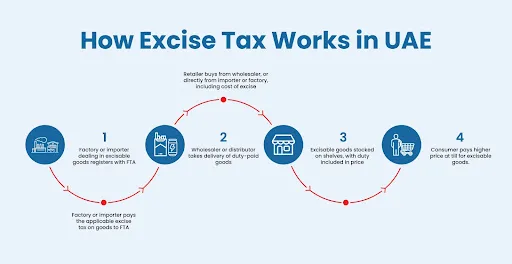
Excise tax, an indirect tax, was introduced in the UAE in 2017. Its primary aim is to deter the consumption of goods that are harmful to human health or the environment. The goods currently subjected to excise tax in the UAE include carbonated drinks, tobacco products, energy drinks, electronic smoking devices, and liquids, and products with added sugar or sweeteners. The tax rates vary based on the nature of the goods, with rates like 50% for carbonated drinks and 100% for tobacco products.
Excise tax is levied on the importer, producer, or stockpiler of excise goods in the UAE. The tax calculation is based on the value of the goods at the time of release for consumption. The payment can be done through two schemes: monthly payments, where taxpayers file a monthly excise tax return and pay the due tax within 15 days of the period end, or quarterly payments, requiring taxpayers to file quarterly returns and pay the due tax within 30 days of the period end.
Registering for excise tax in the United Arab Emirates (UAE) is a crucial step for businesses looking to comply with the country’s tax laws. As of my last knowledge update in January 2022, the UAE imposes excise tax on specific goods, such as tobacco, energy drinks, and carbonated beverages. To navigate this process seamlessly, businesses can refer to official resources like the Federal Tax Authority (FTA) website, where they can find comprehensive information on registration procedures and compliance requirements.
According to statistics from the FTA, a significant number of businesses have successfully registered for excise tax since its introduction. Accessing the latest data and guidelines is essential for staying abreast of any regulatory changes. For the most up-to-date information and assistance, businesses can explore the FTA’s dedicated portal on excise tax registration: FTA Excise Tax Registration Portal. It serves as a valuable resource to ensure that businesses adhere to the UAE’s excise tax laws and operate within the legal framework.
Responsibilities of Excise Taxpayers
Excise taxpayers in the UAE bear several responsibilities, including registration with the Federal Tax Authority (FTA), filing tax returns on a monthly or quarterly basis, timely payment of excise tax, and maintaining accurate records of all excisable goods.
How Excise Tax Consultants Facilitate Compliance
Given the complexity of excise tax compliance, businesses often turn to excise tax consultants for guidance. Alliance Prime, as a prominent accounting and tax consultancy in the UAE, provides a range of services to assist businesses in meeting their excise tax obligations. These services include excise tax registration, filing returns, calculating tax liability, record-keeping, dealing with the FTA, and managing excise tax risks.
Benefits of Using Excise Tax Consultants
The advantages of engaging excise tax consultants are manifold. They help in reducing the risk of non-compliance, ensuring businesses meet all excise tax obligations and avoid penalties. Excise tax consultants provide peace of mind by handling the intricate aspects of compliance, allowing businesses to focus on core operations. Their expertise also extends to offering valuable advice on various aspects of excise tax compliance.
Who Should Register for Excise Tax?
Excise tax registration is mandatory for businesses involved in importing excise goods, producing or manufacturing excise goods released for consumption in the UAE, stockpiling excise goods, and overseeing excise warehouses or designated zones. The FTA provides support and guidance, and non-compliance can result in penalties and fines.
Exemptions for Excise Tax Registration
For those not regularly importing excise goods, exemptions from registration may apply. However, even if exempt, businesses might still be required to pay excise tax on goods exceeding the duty-free threshold. It’s crucial to understand these nuances to ensure compliance.
How to Comply with Excise Tax Laws in UAE
For businesses aiming to comply with excise tax laws in the UAE, a strategic approach is crucial. Consultants like Alliance Prime excel not only in ensuring compliance but in providing comprehensive services that go beyond the basics. From excise tax registration to ongoing advisory support, excise tax consultants offer a holistic solution.
Key Steps for Compliance
This section outlines key steps businesses can take to ensure excise tax compliance:
- Registration with FTA: Initiate the compliance journey by registering with the FTA. Excise tax consultants guide businesses through this process, ensuring accurate and timely completion.
- Examine Business Activities: Understand the scope of excise tax by identifying specific business activities that require compliance. Excise consultants conduct a thorough analysis to pinpoint areas needing attention.
- Comprehensive Record-Keeping: Maintain meticulous records of excisable goods. Excise tax consultants assist in establishing robust record-keeping systems, ensuring transparency and accuracy.
- Audit Preparedness: Prepare for potential FTA audits by conducting internal audits. Excise consultants provide audit support, identifying and rectifying compliance issues.
- Timely Filing of Returns: File excise tax returns on time to avoid penalties. Excise tax consultants offer assistance in filing returns within stipulated time frames.
- Stay Informed About Changes: Stay abreast of regulatory changes to ensure ongoing compliance. Excise consultants provide advisory services, keeping businesses updated on the latest developments.
Additional Tips for Businesses
In addition to excise tax specifics, businesses are advised to keep accurate records of excisable goods, regularly review compliance procedures, and seek professional advice from excise tax consultants if needed. By following these tips, businesses can enhance their excise tax compliance and avoid potential penalties or interest charges.
Your Trusted Excise Tax Partner in UAE
Alliance Prime stands out as a trusted excise tax partner in the UAE. Their team of experienced excise tax consultants assists businesses in excise tax compliance, from registration to ongoing advisory services. The consultants ensure businesses stay abreast of regulatory changes and provide expert guidance on adapting to evolving tax laws.
Conclusion
Navigating excise tax compliance in the UAE demands not just adherence to regulations but a strategic and proactive approach. Excise tax consultants emerge not only as a guide for compliance but as a comprehensive partner, offering services that extend beyond the essentials. For businesses seeking not only excise tax compliance but a trusted partner for their overall tax and financial needs, tax consultants such as Alliance Prime stand ready to deliver. If you are still confused about how to register for excise tax in the UAE, feel free to contact the excise tax consultants in UAE.
Demystifying Federal Corporate Tax in UAE: What You Need to Know

The UAE’s Ministry of Finance made a significant announcement in January 2022, paving the way for the implementation of Corporate Tax in United Arab Emirates. Set to be effective from June 1, 2023, the Corporate Income Tax is a direct tax imposed on business income.
While the introduction of Corporate Tax in UAE might appear to be a novel development, it is essential to recognize that this practice is not unique to the UAE and is indeed prevalent in several other countries, including the US, India, France, and some other Gulf Cooperation Council (GCC) nations such as Oman, Kuwait, and Qatar. Notably, the UAE’s Corporate Tax rate is set at an impressive 9%, the lowest compared to the rates in other nations.
Understanding Corporate Tax in UAE
Corporate Tax in UAE is a direct tax levied on the taxable income of entities, calculated based on various adjustments to the net income or profit of corporations and businesses. The applicability of Corporate Tax extends to a range of entities, including residents, juridical persons incorporated in the UAE, natural persons conducting business in the UAE, foreign juridical persons managed and controlled in the UAE, and non-residents with certain ties to the UAE, such as a permanent establishment or income sourced from the UAE. It is imperative for businesses to comprehend the scope of Corporate Tax and evaluate its impact on their operations to ensure compliance with the relevant regulations.
Administration and Implementation
The responsibility for the administration, collection, and enforcement of Corporate Tax in UAE falls under the purview of the Federal Tax Authority. Meanwhile, the Ministry of Finance retains its role as the competent authority for handling bilateral or multilateral agreements and facilitating the international exchange of information for tax purposes.
Economic Implications of Corporate Tax in UAE
The introduction of Corporate Tax in UAE is expected to bolster the nation’s economy by reinforcing corporate governance and promoting sustainable economic transformation. Considered a pivotal step toward the country’s economic diversification and growth, Corporate Tax has been positioned as a catalyst for positioning the UAE as a leading global hub for business and investment. Furthermore, this move underlines the UAE’s commitment to upholding international standards for tax transparency and preventing unlawful tax practices.
Exemptions and Applicability
Certain entities are exempt from Corporate Tax in UAE, subject to meeting specific conditions outlined in the law. These exemptions include government entities, government-controlled entities, certain businesses engaged in extractive and non-extractive activities, qualifying investment funds, qualifying public benefit entities, and pension or social security funds. Furthermore, small businesses meeting the revenue threshold specified by the authorities can avail of ‘small business relief,’ which exempts them from paying Corporate Tax and entails simplified compliance obligations. As the details regarding the revenue threshold for small business relief are yet to be specified, businesses should remain vigilant and stay informed about the evolving regulatory landscape.
While businesses with a net profit exceeding 375,000 AED are subject to Corporate Tax, specific categories are exempt from this obligation. Notably, individuals deriving income from employment, real estate, or personal investments unrelated to a trade or enterprise in the UAE are exempt from Corporate Tax. Additionally, foreign investors who do not conduct business operations in the UAE are also not liable for Corporate Tax. Certain categories, such as qualifying free zone businesses and income from qualifying shareholdings, enjoy exemptions from Corporate Tax, subject to meeting specified criteria outlined by the law.
Deductible and Non-deductible Expenses under Corporate Tax in UAE
Corporate Tax regulations in the UAE dictate a set of rules governing the deductibility of various expenses. While certain expenses are eligible for deductions, others are explicitly excluded from the computation of taxable income. Expenses such as depreciation or amortization costs for capital assets, business setup expenses, and certain interest costs on debt funding may be deductible. On the other hand, any expenses incurred for receiving exempt income, losses not linked to the business, or additional expenses not compliant with the established regulations may not be deductible for Corporate Tax purposes.
Corporate Tax Rates in UAE and Filing Process
The Corporate Tax rate in the UAE stands at 9% for taxable income above 375,000 AED, while businesses with a net profit below this threshold are not subject to Corporate Tax. Corporate Tax is computed based on the net profit recorded in a company’s financial accounts, ensuring a transparent and straightforward calculation process. The filing of Corporate Tax returns in the UAE is carried out through a self-assessment mechanism, requiring businesses to file their tax returns with the Federal Tax Authority within the stipulated time frame.
However, it is essential to stay updated on any further clarifications and supplementary guidelines provided by the UAE Ministry of Finance to ensure a comprehensive understanding of the tax regime and its implications for businesses operating in the UAE.
Maintaining Financial Records
UAE businesses are expected to maintain comprehensive financial records in compliance with Corporate Tax regulations. These records provide essential documentation for the filing of Corporate Tax returns and play a crucial role in ensuring transparency and accuracy in tax-related proceedings. The precise documentation requirements may vary, but they typically involve detailed financial reports, trade license copies, owner/partner details, and other relevant information essential for tax compliance and reporting.
UAE Corporate Tax in Free Zones
The introduction of Corporate Tax in UAE also impacts businesses operating within free zones, albeit with certain variations. Qualifying Free Zone Persons (QFZPs) may be subject to Corporate Tax but are eligible for a 0% tax rate provided they meet specific criteria regarding substance maintenance, income eligibility, and compliance with transfer pricing requirements. Businesses within free zones need to carefully evaluate their status as QFZPs to determine their tax obligations accurately.
Qualifying Free Zone Persons have the opportunity to benefit from a 0% Corporate Tax rate, provided they meet specific conditions, including maintaining sufficient substance in the UAE, deriving qualifying income, complying with transfer pricing regulations, and meeting additional criteria prescribed by the Ministry of Finance. Businesses operating in free zones should ensure strict adherence to the conditions stipulated under the Corporate Tax Law to avail themselves of the preferential tax rate and maintain compliance with regulatory requirements.
Adapting to the Changes
As the UAE implements Corporate Tax, businesses must proactively assess the impact of the new tax regime on their operations and prepare themselves to fulfill the compliance and reporting obligations associated with Corporate Tax. This proactive approach involves a comprehensive review of business activities, ensuring operational readiness to manage tax-related compliance, and maintaining meticulous documentation from a Corporate Tax perspective. By remaining proactive and well-informed, businesses can navigate the evolving tax landscape in the UAE effectively and contribute to the sustainable growth of their enterprises.
Taxable Income and Deductions
The CT regime in the UAE determines taxable income based on the net profit or loss as stated in the financial statements prepared in accordance with UAE-accepted accounting standards, typically International Financial Reporting Standards (IFRS). However, the CT Law restricts the deduction of certain expenses to ensure that tax relief is only granted for business-related expenditures. Additionally, it prescribes adjustments to the accounting net profit for various items, including unrealized gains/losses, exempt income, transfer pricing adjustments, and special reliefs for qualifying business activities, among others. These provisions aim to simplify the tax calculation process and ensure a fair and accurate assessment of taxable income.
Impact of International Tax Developments
As a member of the OECD Inclusive Framework on BEPS, the UAE is expected to adopt the GloBE (Global Anti-Base Erosion) rules proposed under Pillar Two, which target large multinational groups with a global minimum effective tax rate of 15%. While the CT Law currently lacks specific provisions on Pillar Two, the impact of these rules is expected to influence UAE-based multinational groups, especially in jurisdictions where their subsidiaries operate.
Administrative Provisions and Compliance
The CT Law introduces specific administrative provisions that require taxable persons to maintain transfer pricing documentation and records for a minimum of seven years. These measures aim to streamline compliance and ensure transparency in transactions and arrangements with related parties and connected persons. The authority responsible for the administration and enforcement of the CT Law is the Federal Tax Authority, while the Ministry of Finance remains the competent authority for international tax agreements and information exchange.
Advanced Pricing Agreements and Tax Assessments
The Corporate Tax Law allows businesses to seek clarifications or request advance pricing agreements from the relevant authority. This provision ensures that businesses can obtain guidance on tax matters and foster a more transparent and cooperative relationship with the tax authorities. Additionally, non-compliance with the Corporate Tax Law may lead to penalties and fines in accordance with the Tax Procedures Law.
Seeking Expert Assistance
Navigating the complexities of Corporate Tax in UAE necessitates expert guidance and support. With the intricate nuances of tax laws and regulations, businesses can benefit significantly from the services of experienced accounting and tax consultancy firms. Alliance Prime, a leading accounting and tax consultancy firm in the UAE, stands as a trusted partner for businesses seeking comprehensive solutions and expert guidance in managing Corporate Tax compliance and reporting obligations.
With a commitment to delivering tailored services tailored to each client's specific needs, Alliance Prime offers a wealth of expertise and knowledge to ensure seamless navigation of the Corporate Tax landscape in the UAE.
For comprehensive assistance and reliable support in managing your Corporate Tax obligations, visit Alliance Prime at https://alliance-acc.com/ or reach out to their team of seasoned professionals for personalized consultation and guidance. With Alliance Prime, you can ensure a smooth and hassle-free experience in addressing your Corporate Tax requirements and optimizing your business operations in the UAE.
Looking Ahead
While the introduction of corporate tax in UAE represents a significant shift in the country’s tax landscape, the government’s commitment to maintaining a business-friendly environment is evident in the thoughtful design of the Corporate Tax Law. With its relatively low tax rates and a compliance-friendly approach, the UAE continues to position itself as an attractive destination for businesses and foreign investors seeking a favorable tax environment.
For businesses operating in the UAE, understanding the intricacies of the Corporate Tax Law is vital to ensure compliance and navigate the evolving global tax landscape. As the Corporate Tax Law continues to evolve and new provisions and clarifications are introduced, staying informed and seeking guidance from experienced tax professionals will be instrumental in managing the tax implications effectively.
Alliance Prime, a leading accounting and tax consultancy in the UAE, is dedicated to helping businesses navigate the complexities of the UAE’s corporate tax regime. With our expertise and in-depth knowledge of the Corporate Tax Law, we are committed to assisting businesses in understanding and complying with the regulations while optimizing their tax positions. For more information and personalized assistance, please visit our website at https://alliance-acc.com/.
Why is Alliance Prime the best Tax Consultancy in Dubai?
Alliance Prime is a leading provider of auditing, accounting, taxation, and advisory services in the UAE. Our expert team will guide you through the complex laws and regulations of UAE, including Corporate Tax, VAT, Excise Tax, Accounting and Bookkeeping, ESR, Financial Advisory, ERP, etc. We stay up-to-date with the latest changes in laws and regulations in the UAE. If you’re looking for reliable and professional auditing, accounting, taxation, and advisory services in the UAE, look no further than Alliance Prime.
To Book a Free Consultation, contact us on: at- +971 58 825 7795 or Email us at:- contact@alliance-acc.com