Tag: excise tax
FTA Releases Cabinet Decision No. 108 of 2023 Amending UAE Excise Tax Regulations
Changes in UAE Excise Tax Laws: Cabinet Decision 108 of 2023 on Federal Decree Law No.7 of 2017 on Excise Tax
In a recent development, the United Arab Emirates Federal Tax Authority (FTA) revealed major revisions to the UAE Excise Tax structure through Cabinet Decision 108 of 2023. These amendments, marking a significant shift in the taxation landscape since its introduction in 201, have taken effect since last December 1, 2023.
The key changes in the amended regulation are as follows:
- Introduction of New Definitions:
The decision introduces new terms such as “Official Evidence,” “Shipping Certificate,” and “Commercial Evidence” to streamline the process of verifying the export of Excise Goods from the state. These changes are intended to enhance clarity and accuracy in record-keeping.
- Tax Registration:
The amendments emphasize that a rejected Tax Registration application does not exempt you from complying with UAE excise tax regulations. Businesses can reapply once they meet the Tax Registration requirements, ensuring continued adherence to regulatory standards.
- Tax Deregistration:
Under the new rules, the FTA has the authority to deregister businesses without a formal request from the taxpayer in certain circumstances, such as when the business is no longer liable for the tax or if maintaining the registration could compromise the integrity of the tax system. Article 6 has been amended to allow the Authority to deregister a taxable person without a request in the following conditions:
- If the Authority determines that the person has ceased conducting activities, unless it is proven that they intend to resume these activities within the next six months, or
- If maintaining the registration would harm the integrity of the tax system.
The FTA must notify businesses of deregistration decisions within five business days.
- Stockpiling:
The amendment in Article 11 stipulates that a taxable person’s entire stock of excise goods will be deemed ‘excess’ if audited records of stockpiled goods are not maintained. Businesses are now required to keep audited records of their excise goods from the effective date of the Decree-Law. Failure to maintain these records may result in the Authority considering the entire stock as excess excise goods, thereby making it fully taxable.
- Exemption for Release for Consumption:
Article 12 introduces the concept of ‘natural shortage.’ If a shortage occurs due to the natural characteristics of the goods and meets the standards and controls specified by the Authority, the shortage can be notified according to the approved mechanisms. Proper documentation must be maintained to prove the shortage. In such cases, the goods are not considered as released for consumption.
The provisions also outline exceptions to the release of Excise Goods for consumption, particularly in cases of natural shortages within designated zones. These ensure proper documentation, notification, and verification processes for businesses operating in these zones.
- Treatment of Designated Zone:
A new clause has been added to Article 15, treating a Designated Zone as if it were within the State if there are changes in operational mechanisms or violations of Designated Zone conditions. Additionally, the requirement to retain sufficient documentation on the value and quantity of excise goods subject to deficiency or shortage, or those that will be destroyed, has also been included in this article. Treating the Zone as within the State in case of operational changes or violations underscores the commitment to maintaining regulatory standards.
- Documents for Deductible Tax:
In practical scenarios, the Authority now allows the submission of a customs declaration and commercial evidence, or an Exit Certificate and official evidence, to prove the export of goods. However, the Authority retains the discretion to accept these documents and may specify alternative forms of evidence depending on the nature of the goods or exports. Clarifications regarding the considered payment of tax further support this framework.
The Authority has also clarified that rejection of tax registration or forced deregistration does not exempt a person from complying with the provisions of the law. This includes submitting another application for registration when the conditions are met.
Another notable amendment, effective from June 1, 2024, introduces the option for non-registrants to apply for a refund on excise goods exported directly or indirectly, upon fulfillment of certain conditions.
Tax Refunds in Special Cases:
New provisions establish conditions for tax refunds on direct and indirect exports by non-taxable persons conducting business. These provisions impose strict requirements, including physical exportation, payment evidence, and the retention of specific documents, to ensure the legitimacy of refund applications.
Conclusion:
Cabinet Decision 108 of 2023 reflects the UAE’s Federal Tax Authority’s proactive efforts to enhance the UAE Excise Tax framework. As businesses adjust to these changes, understanding the updated provisions is essential for compliance and risk mitigation. The transparent and detailed nature of the amended regulations contributes to a more straightforward and reliable taxation system in the UAE.
Summary of the Amendments to Executive Regulations of UAE Excise Tax Law
In conclusion, the recent amendments introduced through Cabinet Decision No. 108 of 2023 mark a significant shift in the regulatory landscape governing UAE Excise Tax in the UAE. These changes, effective from 1st December 2023, address key aspects such as definitions, tax deregistration criteria, stockpiling considerations, exemptions for goods release, treatment of Designated Zones, and documents required for deductible tax.
The explicit provisions aim to enhance clarity, streamline processes, and ensure adherence to compliance standards. Taxable persons are urged to familiarize themselves with these updates, recognizing their implications for taxation and operational practices. As the regulatory framework evolves, the Federal Tax Authority continues to strive for a robust and transparent taxation system, promoting fairness and efficiency in the realm of UAE Excise Tax.
The changes aim to bring more clarity to the taxation system, emphasizing compliance and transparency. Businesses are encouraged to understand these amendments to ensure continued adherence to regulatory standards in the UAE.
How Alliance Prime can help you in this new UAE Excise tax amendment?
Alliance Prime can provide support in reviewing the operations of your entity, ensuring compliance with the updated regulations in Excise Tax UAE.
For Queries and Support:
WhatsApp: +971 58 825 7795
Email: contact@alliance-acc.com
Excise Tax in UAE: Understanding the Basics of Indirect Tax
In the intricate landscape of the United Arab Emirates (UAE), businesses encounter various challenges, with tax compliance standing out as a paramount concern. Amidst the dynamic tax framework, two significant pillars, Value-Added Tax (VAT) and Excise Tax in UAE, play a pivotal role. This article delves into the realm of Excise Tax, shedding light on its fundamentals and exploring how businesses can benefit from the expertise of excise tax consultants, with a focus on Alliance Prime.
Understanding Indirect Taxes in the UAE
Before delving into the specifics of Excise Tax, it is essential to grasp the broader context of indirect taxes in the UAE. VAT, introduced in 2018, is a consumption-based tax applied to most goods and services. It is a responsibility that businesses bear throughout the supply chain, from charging and collecting to paying it to the Federal Tax Authority (FTA). The VAT landscape encompasses standard rates, zero rates, exemptions, and goods and services outside the VAT scope.
Excise Tax in UAE, implemented in 2017 and expanded in 2019, is another vital component of the UAE’s indirect taxation system. Often referred to as a “sin tax,” Excise Tax is levied on specific goods considered harmful to human health or the environment. These goods include tobacco and tobacco products, electronic smoking devices, energy drinks, carbonated drinks, and sweetened drinks.
Products Applicable for Excise Tax in UAE
Excise tax is a form of indirect tax levied on specific goods, typically those that are harmful to human health or the environment. Excise tax was introduced in the UAE in 2017, and it is currently applicable to the following good. The scope of Excise Tax includes, but is not limited to:
- Tobacco and Tobacco Products: All items listed within Schedule 24 of the GCC Common Customs Tariff fall under the purview of Excise Tax.
- Electronic Smoking Devices and Tools: Since 2019, Excise Tax is applicable to electronic smoking devices and the liquids used in such devices.
- Energy Drinks: Any beverage marketed or sold as an energy drink, containing stimulant substances such as caffeine, taurine, ginseng, and guarana, is subject to a 100% tax.
- Carbonated Drinks: All aerated beverages, except for unflavored aerated water, attract a 50% tax.
- Sweetened Drinks: Introduced in 2019, sweetened drinks are subject to a 50% tax.
Businesses Obligated to Register for Excise Tax
Businesses engaging in the import, production, or stockpiling of excise goods, as well as overseeing excise warehouses or designated zones, are required to register for Excise Tax. Unlike VAT, there is no threshold for Excise Tax, necessitating registration for all entities involved with excise products.
Excise Tax Registration Process
Registering for Excise Tax in UAE is a crucial step for businesses, and the process is facilitated through the e-services section on the FTA website. The deadline for registration is imperative, and businesses must ensure compliance with excise tax regulations to avoid penalties.
The Role of Excise Tax Consultants
Given the complexity of excise tax regulations, businesses can benefit significantly from the services of excise tax consultants. Alliance Prime, a renowned accounting and tax consultancy based in the UAE, offers comprehensive excise tax solutions. Their services include excise tax registration, compliance management, and expert guidance to navigate the nuances of excise tax laws.
Excise Tax – UAE: A Closer Look
Excise tax is an indirect tax imposed on the sale of specific commodities. These goods are taxable if they are imported into the UAE, manufactured in the UAE, or stockpiled in the UAE. The primary purpose of the excise tax is to reduce the consumption of those particular goods to restrict unhealthy practices. In certain scenarios, goods will be physically labeled to show that the excise tax has already been paid to the government.
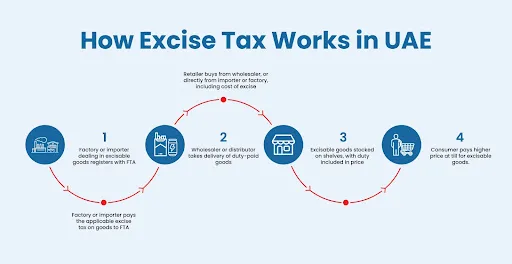
How Excise Tax in UAE Works
Excise tax in UAE is levied on the importer, producer, or stockpiler of excise goods in the UAE. The tax is calculated based on the value of the goods at the time of release for consumption.
There are two ways to pay excise tax in the UAE:
- Monthly payment: Excise taxpayers can register for monthly payments with the Federal Tax Authority (FTA). Under this scheme, taxpayers are required to file a monthly excise tax return and pay the tax due within 15 days of the end of the tax period.
- Quarterly payment: Excise taxpayers can also register for quarterly payments with the FTA. Under this scheme, taxpayers are required to file a quarterly excise tax return and pay the tax due within 30 days of the end of the tax period.
Excise Tax Registration Services
Excise Tax Registration Services are integral to ensuring that businesses maintain compliance with taxation laws, which undergo frequent changes and revisions. Companies like Alliance Prime provide these services to help businesses cope with changes, revisions, additions, and removal of tariffs. The UAE government introduced Excise Tax in 2017 on tobacco products, carbonated drinks, and sport or energy drinks. Two years later, in 2019, the government extended Excise Tax to e-cigarettes, soft drinks, and e-liquids. In effect, the Emirati government charges Excise Tax on goods that harm human health and the environment.
Excise Tax in UAE and Its Impact on Businesses
Businesses involved in the import of excise goods into the UAE, the production of excise goods released for consumption, the stockpiling of excise goods, or overseeing an excise warehouse have a responsibility to register for Excise Tax. The Federal Tax Authority (FTA) provides extensive support and guidance to assist businesses in fulfilling their compliance obligations. Failure to comply with Excise Tax regulations can result in audits and penalties imposed by the FTA.
Conclusion
In conclusion, Excise Tax in UAE is a critical aspect of the indirect tax landscape. Businesses must stay informed, comply with regulations, and seek professional assistance to ensure a seamless experience. Alliance Prime stands as a reliable partner, guiding businesses through the complexities of Excise Tax and contributing to their overall success. For more information and to enhance your Excise Tax compliance, visit Alliance Prime’s website: https://alliance-acc.com/.
Excise Tax Registration in UAE: How to Comply with Tax Laws

The United Arab Emirates (UAE) boasts a robust and dynamic business environment, but with the advantages come regulatory responsibilities. One such critical aspect for businesses operating in the UAE is excise tax compliance. This comprehensive guide combines the expertise of Alliance Prime, a leading accounting and tax consultancy in the UAE, with key insights into excise tax laws to help businesses navigate this complex terrain effectively.
Excise Tax in UAE: Understanding the Basics of Indirect Tax
Excise tax, an indirect tax, was introduced in the UAE in 2017. Its primary aim is to deter the consumption of goods that are harmful to human health or the environment. The goods currently subjected to excise tax in the UAE include carbonated drinks, tobacco products, energy drinks, electronic smoking devices, and liquids, and products with added sugar or sweeteners. The tax rates vary based on the nature of the goods, with rates like 50% for carbonated drinks and 100% for tobacco products.
Excise tax is levied on the importer, producer, or stockpiler of excise goods in the UAE. The tax calculation is based on the value of the goods at the time of release for consumption. The payment can be done through two schemes: monthly payments, where taxpayers file a monthly excise tax return and pay the due tax within 15 days of the period end, or quarterly payments, requiring taxpayers to file quarterly returns and pay the due tax within 30 days of the period end.
Registering for excise tax in the United Arab Emirates (UAE) is a crucial step for businesses looking to comply with the country’s tax laws. As of my last knowledge update in January 2022, the UAE imposes excise tax on specific goods, such as tobacco, energy drinks, and carbonated beverages. To navigate this process seamlessly, businesses can refer to official resources like the Federal Tax Authority (FTA) website, where they can find comprehensive information on registration procedures and compliance requirements.
According to statistics from the FTA, a significant number of businesses have successfully registered for excise tax since its introduction. Accessing the latest data and guidelines is essential for staying abreast of any regulatory changes. For the most up-to-date information and assistance, businesses can explore the FTA’s dedicated portal on excise tax registration: FTA Excise Tax Registration Portal. It serves as a valuable resource to ensure that businesses adhere to the UAE’s excise tax laws and operate within the legal framework.
Responsibilities of Excise Taxpayers
Excise taxpayers in the UAE bear several responsibilities, including registration with the Federal Tax Authority (FTA), filing tax returns on a monthly or quarterly basis, timely payment of excise tax, and maintaining accurate records of all excisable goods.
How Excise Tax Consultants Facilitate Compliance
Given the complexity of excise tax compliance, businesses often turn to excise tax consultants for guidance. Alliance Prime, as a prominent accounting and tax consultancy in the UAE, provides a range of services to assist businesses in meeting their excise tax obligations. These services include excise tax registration, filing returns, calculating tax liability, record-keeping, dealing with the FTA, and managing excise tax risks.
Benefits of Using Excise Tax Consultants
The advantages of engaging excise tax consultants are manifold. They help in reducing the risk of non-compliance, ensuring businesses meet all excise tax obligations and avoid penalties. Excise tax consultants provide peace of mind by handling the intricate aspects of compliance, allowing businesses to focus on core operations. Their expertise also extends to offering valuable advice on various aspects of excise tax compliance.
Who Should Register for Excise Tax?
Excise tax registration is mandatory for businesses involved in importing excise goods, producing or manufacturing excise goods released for consumption in the UAE, stockpiling excise goods, and overseeing excise warehouses or designated zones. The FTA provides support and guidance, and non-compliance can result in penalties and fines.
Exemptions for Excise Tax Registration
For those not regularly importing excise goods, exemptions from registration may apply. However, even if exempt, businesses might still be required to pay excise tax on goods exceeding the duty-free threshold. It’s crucial to understand these nuances to ensure compliance.
How to Comply with Excise Tax Laws in UAE
For businesses aiming to comply with excise tax laws in the UAE, a strategic approach is crucial. Consultants like Alliance Prime excel not only in ensuring compliance but in providing comprehensive services that go beyond the basics. From excise tax registration to ongoing advisory support, excise tax consultants offer a holistic solution.
Key Steps for Compliance
This section outlines key steps businesses can take to ensure excise tax compliance:
- Registration with FTA: Initiate the compliance journey by registering with the FTA. Excise tax consultants guide businesses through this process, ensuring accurate and timely completion.
- Examine Business Activities: Understand the scope of excise tax by identifying specific business activities that require compliance. Excise consultants conduct a thorough analysis to pinpoint areas needing attention.
- Comprehensive Record-Keeping: Maintain meticulous records of excisable goods. Excise tax consultants assist in establishing robust record-keeping systems, ensuring transparency and accuracy.
- Audit Preparedness: Prepare for potential FTA audits by conducting internal audits. Excise consultants provide audit support, identifying and rectifying compliance issues.
- Timely Filing of Returns: File excise tax returns on time to avoid penalties. Excise tax consultants offer assistance in filing returns within stipulated time frames.
- Stay Informed About Changes: Stay abreast of regulatory changes to ensure ongoing compliance. Excise consultants provide advisory services, keeping businesses updated on the latest developments.
Additional Tips for Businesses
In addition to excise tax specifics, businesses are advised to keep accurate records of excisable goods, regularly review compliance procedures, and seek professional advice from excise tax consultants if needed. By following these tips, businesses can enhance their excise tax compliance and avoid potential penalties or interest charges.
Your Trusted Excise Tax Partner in UAE
Alliance Prime stands out as a trusted excise tax partner in the UAE. Their team of experienced excise tax consultants assists businesses in excise tax compliance, from registration to ongoing advisory services. The consultants ensure businesses stay abreast of regulatory changes and provide expert guidance on adapting to evolving tax laws.
Conclusion
Navigating excise tax compliance in the UAE demands not just adherence to regulations but a strategic and proactive approach. Excise tax consultants emerge not only as a guide for compliance but as a comprehensive partner, offering services that extend beyond the essentials. For businesses seeking not only excise tax compliance but a trusted partner for their overall tax and financial needs, tax consultants such as Alliance Prime stand ready to deliver. If you are still confused about how to register for excise tax in the UAE, feel free to contact the excise tax consultants in UAE.
Excise Tax Registration – UAE: Your Comprehensive Guide
What we consume on a daily basis is one of the keys to a healthy lifestyle. The UAE Government imposed an excise tax on October 2017 to safeguard the health of its residents. Limiting the intake of specific products that are regarded harmful to our health and discouraging consumers from consuming it. Excise tax registration in UAE is mandatory for the businesses that import, produces, or stockpiles excise goods or release them from a designated zone in the UAE.
Alliance Prime is offering the best excise tax registration services in Dubai. Businesses who are involved in these activities or trade these goods must register for Excise Tax in the UAE as the tax is charged at the time of import or manufacturing.
The following goods are currently subject to excise tax:
- tobacco and tobacco products (Cigarettes, cigars, and other tobacco-related items fall under this category)
- liquids used in electronic cigarette equipment and devices
- tools and electronic cigarette gadgets
- carbonated beverages
- energy beverages
- sweetened beverages
Who is liable for excise tax registration in the UAE?
- Importer of excise goods into the UAE
- Producer of excise goods in UAE
- Warehouse Keeper of Excise Goods in UAE
- Stockpiler of excise goods in the UAE
When to get excise tax registration TRN?
To register for UAE Excise Tax, businesses intend to import, produce, or stockpile of excisable goods. They must register within thirty days before the start of operation or the law’s effective date. If a business does not regularly import or release excise goods from DZ, it may be eligible for excise tax registration i.e., no more than once in a 6-month period, or 3 times in a 24-month period.
Deadline for Excise Tax Registration
There is no registration threshold for excise tax; therefore, any corporation that intends to be involved in any of the activities listed above must register prior to the date of introduction. Excise duties on the expanded list have been effective from 1st December 2019 and full compliance on registration is mandatory. Tax Registration will avoid all stakeholders any fines or obstacles that may come up from late or failed registration.
Providing Excise Tax Consultancy and Compliance
Alliance is dedicated to assisting businesses that have trouble adhering to FTA rules and laws by offering them technical advice and knowledge. Our experience and understanding help businesses get an unbiased view of the issues they are dealing with and provide them with solutions.
Excise Health Check/Pre-Tax Audit
Conducted by the Federal Tax Authority to determine whether the taxpayer is following tax laws and to ensure that the tax liability has been paid within the specified deadline.
How can we help?
Alliance will assist in organizing all required documentation that the FTA is requesting and ensure that everything complies with FTA law and regulations. Our company will help you find any errors or mistakes in your excise return with the support of our knowledgeable and experienced team, who have years of experience, in order to reduce the number of fines and penalties.
Tax Disputes Resolution Committee (TDRC)
Majority of applications for reconsideration of FTA penalties are rejected. The taxpayer has the right to disagree with the FTA’s decision and take their appeal to Tax Disputes Resolution Committee (TDRC) formed by Ministry of Justice.
How can we help?
In the event that the reconsideration application is rejected and the TDRC matter moves forward, our firm will respond or make submissions on the Company’s behalf and provide any necessary support.
Refund of excise taxes and a voluntary disclosure
- A taxable person may be eligible to apply for a refund position when filing an excise return and the value of the deductible is more than the value of excise tax due. When excise tax is already paid on an excise good and then exported outside the UAE.
- When the Taxpayer submitted an incorrect or omitted information for the Excise Return, Refund Application, or Tax Assessment. They can notify FTA by submitting Voluntary disclosure
How can we help?
- We will be preparing voluntary disclosure form to rectify the errors made in the filed excise return.
- We will be Preparing and submitting the VD on the company’s behalf and assisting them by responding to the FTA’s additional requirements.
Tax Agent and Tax Agency
Businesses can simplify the process of fulfilling their tax obligations in the UAE by working with an approved tax agent or tax agency.
How can we help?
As an approved tax agent and agency, Alliance can assist the taxpayer by communicating with FTA about all tax duties and filing any requests for the FTA to review its decisions. Representing the company during any audits and from the FTA.
Tax Assessments
The excise tax assessment, the most complex and challenging indirect tax in the United Arab Emirates, and carefully monitored by the Federal Tax Authority. In the first half of 2022, the FTA conducted inspections of businesses that deal with excise goods. Businesses have committed thousands of violations, including failure to register for excise tax, failure to comply with excise drink package requirements, packaging illegal cigarettes and tobacco goods without a digital stamp, and many more.
How we can help?
Issues and liabilities may unavoidably develop following an Excise inspection. Our firm can offer guidance on how to deal imposed penalties and keep them to a minimum as possible and also assist the taxpayer in reviewing the excise tax assessment made by the FTA.
Excise Tax Registration & Amendment
Since there is no threshold for for excise tax registration, everyone who engages in any of the below activities required to register for excise tax:
- The import of excise goods into the UAE.
- The production of excise goods where they are released for consumption in the UAE.
- The stockpiling of excise goods in the UAE in certain cases.
- The release of excise goods from a designated zone
Amendment:
You must notify the FTA by amending your records within (20) working days of the occurrence of any events that will affect the Excise Tax records retained by the FTA, as specified during your registration, if you are registered for Excise Tax.
Designated-Zone Registration/Renewal
A designated zone Warehouse can be set up any place in UAE after obtaining approval from the federal tax authority a company is also required a Warehouse keeper to supervise the activities of the proposed DZ registrations your warehouse as the designated zone will benefit your company as excise tax payment will be deferred till goods are released to the mainland, it avoids the unnecessary delay in claiming a refund on that goods that are exported and you can avail the benefit of waiver of excise tax on lost and damaged goods approved by FTA unlike when it’s lost in the mainland.
We can help with the Registration of Warehouse Keepers & Designated Zones. Our team will walk you through the process, and our subject matter experts will respond to all of your questions along the way. With our expertise and experience in all types of excise law, you can take advantage of the exemptions from excise laws in the designated zones.
DZ Renewal
The federal tax authority has published a public clarification regarding the renewal of designated zone registration for excise tax purposes. The Designated Zone registration is valid for 12 months and must be renewed every year.
Warehouse keeper must follow below procedures to maintain its designated zone status
*Examine the designated zones’ registration expiry dates
*For each designated zone that needs to be renewed, submit the designated zone renewal (amendment) form and pay the renewal fee separately;
*Examine the quantity and nature of excise items held in the specified zone so that the FTA can assess the value of the existing financial guarantee and, if necessary, direct the warehouse keeper to submit an updated financial guarantee.
Excise Tax Deregistration
Any company that has registered for excise can request excise tax deregistration within a certain time frame from the date he is no longer engaged in taxable activities. i.e., import, production, and stockpiling of excise goods in the UAE. In order to deregister, a taxable person must be up to date with all tax return submissions and payments of tax and penalties. It is important to note that fines apply if an application is not submitted to Timeframe.
Excise Product Registration & Amendment (RSP)
Excise Products that are considered to be harmful to human health must register to FTA through the government body “Brandysnc.” Products such as carbonated beverages, energy drinks, tobacco and tobacco products, electronic cigarette tools and devices, liquids used in such tools and devices, and sweetened beverages.
How we can help?
Our company will handle every aspect of registration, including obtaining the Municipality Certificate (Food Label Assessment and MOIAT Conformity Certificate + Schedule of Certification). Advice the client regarding the type of registration they should undertake.
Stockpile Calculation
Before the first implementation of the excise tax in October 2017, Businesses that held excise goods in free circulation in the UAE such as carbonated beverages, energy drinks, tobacco, or tobacco products were obligated to disclose the quantity of their products to the FTA and pay the excess excise tax.
Similarly, if someone has Sweetened beverages, electronic smoking devices and items in their possession as of December 1st, 2019, the person should consider whether he would qualify as a stockpiler or not for Excise Tax purposes and to pay Excess Excise Tax on the stock on hand on 1 December 2019.
How we can help?
An experienced team of highly skilled specialists and auditors in the UAE. Our company is committed to assisting businesses in every phase of declaring their goods to the FTA without generating any issues or penalties.
Why Choose Alliance Prime Tax Consultants and Accountants?
- Expertise: Alliance Prime’s experts have a thorough understanding of UAE Excise Tax legislation thanks to their years of experience in tax consultancy. With precise, open financial management in line with the highest international standards, we are your partner in expanding your company.
- Efficiency: We make sure the registration procedure is quick and hassle-free, saving you time and energy. Since tax collection is not the goal of tax policy but merely a duty, reducing the administrative burden benefits both taxpayers and the economy.
- Compliance: Following the laws and regulations imposed by an authority has become vital. A business should select a reliable organization that provides regulatory tax and compliance services if it wants to avoid future complications. Our team makes sure that your company complies with all Excise Tax rules, minimizing the possibility of fines.
- Customized Solutions: We tailor our services to meet your specific business needs, providing personalized solutions.
- Ongoing Support: To understand the taxation system of the nation where you live and operate, it is advantageous for any business to engage a reputable, knowledgeable tax adviser. Alliance Prime Tax Consultants and Accountants offer continuous support and guidance to ensure ongoing compliance.
Excise Tax registration becomes a simple process with Alliance Prime Tax Consultants and Accountants on your side. Allowing you to concentrate on what you do best in running your business.
In conclusion, businesses that produce or sell excisable items or engage in excisable activities must register for excise tax in the United Arab Emirates. You can guarantee compliance and prevent any penalties by being aware of the requirements and strictly adhering to the excise tax registration process. If you need help, think about working with professionals like Alliance Prime Tax Consultants and Accountants.
How to Calculate Excise Tax in UAE?
Calculate Excise Tax in the UAE: Unveiling Methods, Rates, and Implementation Challenges
Since October 2017, the UAE has instituted an excise tax regime that indirectly influences specific goods across production, importation, and sale. This tax launch has dual objectives: generating government revenue and discouraging consumption of harmful items such as cigarettes, fizzy drinks, and energy beverages. In this article, we delve into the various avenues to calculate excise tax costs, explore the specific tax rates in play, and shed light on the UAE’s taxation landscape.
Navigating Compliance and Calculations To comply with excise tax regulations, registered UAE businesses must consistently file returns and pay relevant excise tax on their liable goods. Precise excise tax calculation is paramount to ascertain a company’s financial responsibility. Failure to register or fulfill tax obligations can result in fines and penalties imposed by the Federal Tax Authority (FTA).
Excise Tax Rates in the UAE The UAE applies excise taxes to several products and services, encompassing tobacco, energy drinks, and sugary beverages:
- Tobacco Products: A substantial 100% of the item’s retail price.
- Energy Drinks: Also at an elevated 100% rate, reflecting their stimulating properties.
- Carbonated Drinks: Attracting a 50% excise duty to encourage healthier beverage choices.
Methods of Excise Tax Calculation in the UAE Calculating excise tax in the UAE involves two main methods: the Specific Method and the Ad Valorem Method.
- Specific Method: This involves applying a fixed tax rate per unit of a product. For instance, energy drinks may carry a specific tax rate per milliliter, providing clarity for both businesses and consumers regarding the precise tax amount per unit.
- Ad Valorem Method: This method calculates the excise tax based on a percentage of the product’s value. High-end automobiles might face a 50% excise tax based on retail value, while jewelry could be subjected to a 5% tax based on its retail price. The Ad Valorem Method requires establishing the goods’ value to determine taxable amounts.
Illustrating Excise Tax Calculation To provide a clearer picture, let’s explore examples of excise tax calculation using both methods:
- Specific Method: If a pack of cigarettes costs AED 20, the excise tax would be AED 8, resulting in a total price of AED 28.
- Ad Valorem Method: For an energy drink priced at AED 10, the excise tax would be AED 20 (100% of AED 10).
Challenges in Implementing Excise Tax in the UAE The primary challenge in enforcing excise tax lies in cross-border transactions. Ensuring compliance and collecting tax in such scenarios can be intricate.
Furthermore, SMEs might face challenges in dealing with excise tax adoption. They might opt to pass on costs to customers, potentially impacting pricing, or experience reduced profits. Striking a balance between compliance and business sustainability becomes a crucial endeavor.
Why is Alliance Prime the best Excise Tax Consultancy in Dubai?
It is essential that those who are liable to taxation obtain advice from qualified tax advisors in the UAE. These consultants can contribute to the smooth execution of tax legislation and standards. Significant fines may be assessed for breaking these rules.
As an Excise Tax Consultant in Dubai, Alliance Prime can be a great help in understanding, calculating and filing excise taxes. Our team of experts is committed to giving advice that is specifically catered to your needs. Contact our team for more information if you have any questions or need assistance with excise tax or other tax-related issues. We are available to guide you through the complexities of taxation and verify that you are following all relevant rules.
To to Book a Free Consultation, contact us on: at- +971 58 825 7795 or Email us at:- contact@alliance-acc.com